Whether Your Parasailing Accident Falls Under Maritime Law
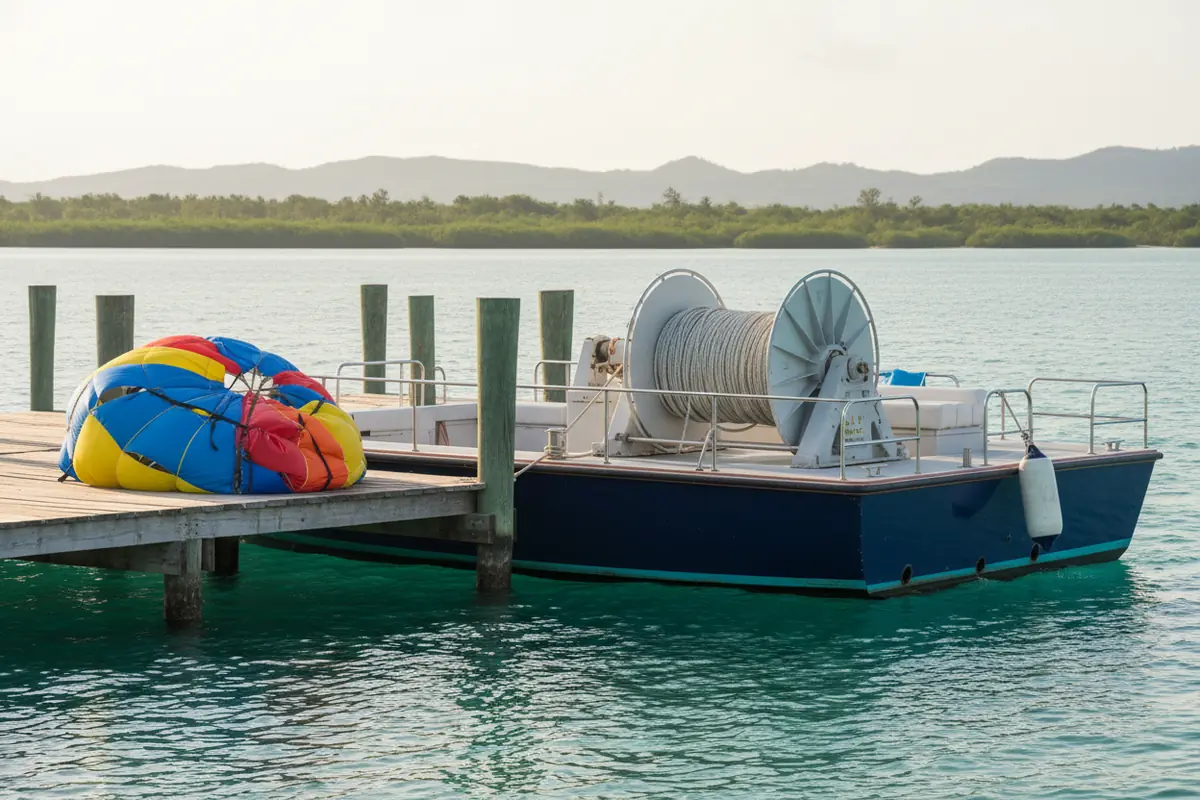
Commercial parasailing lifts a passenger into the air under a parachute-style canopy towed by a motorized vessel over the water. The passenger wears a harness connected to the canopy, and a towline runs from the canopy rig back to the boat. Paragliding is different: it launches from land and involves no vessel. That difference matters, because the boat and the water are what can bring a parasailing injury into maritime law.
If your injury happened on the water, the first question is whether federal courts can hear it under admiralty jurisdiction, their power over cases connected to ships and the water. Under 28 U.S.C. § 1333(1), federal district courts have original jurisdiction over "any civil case of admiralty or maritime jurisdiction, saving to suitors in all cases all other remedies to which they are otherwise entitled." That "saving to suitors" language is why a maritime claim is not always limited to federal court.
In Jerome B. Grubart, Inc. v. Great Lakes Dredge & Dock Co., 513 U.S. 527 (1995), the Supreme Court described admiralty jurisdiction over a tort as requiring conditions both of location and of connection with maritime activity. Location generally means navigable waters, which a federal regulation, 33 C.F.R. § 2.36, defines to include, among others, the territorial seas and internal waters subject to tidal influence.
Maritime jurisdiction over a recreational ride is fact-specific, and many recreational incidents are governed by state law. Which law applies depends on where the injury happened, the vessel, the waters and the injured person's status. For you, the answer shapes which court may hear a claim, which rules on waivers apply and which deadline governs. Sorting out that threshold question is often the first thing a conversation with an attorney addresses. This page covers commercial towline rides; excursions sold by a cruise line are outside it.