Skip to content
Sheet 20 / 64 · Vessels

Workboat Accidents: What the Law Covers and What It Means for Injured Crew

Vessels

National · Updated November 10, 2026

Free Case Evaluation
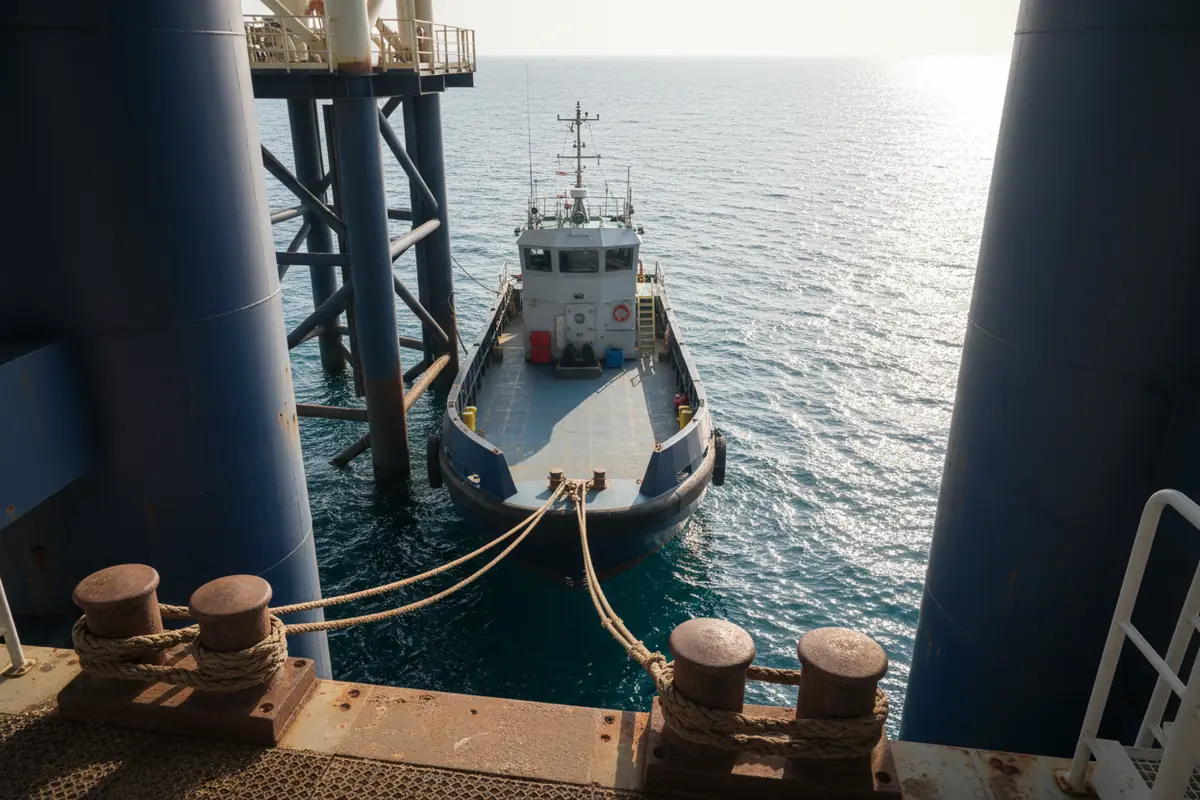
A crew boat tied alongside an offshore platform structure on calm coastal water.
Immediate answer

How federal law treats workboat injuries: the vessel definition, Jones Act seaman claims, 33 U.S.C. § 905(b) vessel claims, inspection and Coast Guard reporting.

On this page
  1. Was Your Workboat a "Vessel"? What a Workboat Is and Why the Definition Matters
  2. Was the Workboat You Were Hurt On Subject to Federal Inspection?
  3. Will the Coast Guard Know About Your Accident? When a Workboat Accident Must Be Reported
  4. If You Were Crew: What the Jones Act Gives a Seaman Injured on a Workboat
  5. If You Are Not a Seaman: What Workers Who Are Not Seamen May Be Able to Claim
  6. What Shapes the Legal Picture After a Workboat Accident
  7. Frequently asked questions
  8. Sources

If you were hurt on a crew boat, supply boat, towboat or other workboat, federal maritime law usually decides your rights. A seaman may bring a negligence claim against the employer under the Jones Act. Other covered workers may claim against the vessel for its negligence. Which path applies depends on vessel and worker status.

Most people facing a workboat injury come to this page in the middle of something hard. There may be a hospital stay, weeks off the water with no paycheck, and an employer or insurer using words like "seaman," "vessel" and "Longshore" without explaining them. If a family member was killed, the questions are heavier still. This page explains what those words mean in federal law, why a craft's status as a vessel comes first, and how a worker's role shapes who may be answerable.

Was Your Workboat a "Vessel"? What a Workboat Is and Why the Definition Matters

"Workboat" is a working label rather than a legal term. It covers crew boats that carry people to job sites, supply boats that move equipment and stores, towing vessels, and utility craft that support other operations. Barges and offshore workers each have their own pages on this site, and they come up here only where they touch a workboat injury.

The law starts with a different question: is the craft a vessel? Federal law answers in 1 U.S.C. § 3, which states that "the word 'vessel' includes every description of watercraft or other artificial contrivance used, or capable of being used, as a means of transportation on water."

That definition is broad, but vessel status is still a threshold legal question, not a common-sense label. Something that looks like a boat from the dock still has to meet the statute's terms, and the answer depends on the craft, the waters and how it was being used.

For an injured worker, this matters because most of the federal remedies discussed below assume a vessel is involved. If the craft does not qualify, the legal ground can shift entirely. A person in this position may want to note what the craft was, what it was built and used to do, and whether it moved people or cargo on the water when the injury happened. Sorting out whether those facts meet the statute is one of the first things a conversation with an attorney can address.

Was the Workboat You Were Hurt On Subject to Federal Inspection?

Congress lists the categories of vessels subject to inspection in 46 U.S.C. § 3301. If you were hurt on a workboat, two of its fifteen categories are the ones most likely to describe your vessel: offshore supply vessels and towing vessels. The full list also covers freight vessels, nautical school vessels, passenger vessels, sailing school vessels, seagoing barges, seagoing motor vessels, small passenger vessels, steam vessels, tank vessels, fish processing vessels, fish tender vessels, Great Lakes barges and oil spill response vessels.

Inclusion on this list reflects federal oversight of vessels that carry workers and do demanding work. The same rule shapes the regulatory backdrop on tugboats and other towing craft.

The statute says which categories are subject to inspection; it does not, on its own, say whether any particular boat was inspected or what an inspection found. For someone hurt aboard, the stake is practical: inspection status is part of the factual setting against which an accident is later understood. Families often ask whether the vessel fell within an inspected category and what its inspection history shows, because those questions can bear on how the vessel was maintained and operated, and an attorney can help sort out what that history may mean for a claim.

Will the Coast Guard Know About Your Accident? When a Workboat Accident Must Be Reported

If you were injured on board, you may wonder whether anyone told the government. Federal regulation puts that duty on the vessel side, not on the injured worker. Under 46 C.F.R. § 4.05-1(a), "the owner, agent, master, operator, or person in charge" must notify the nearest Coast Guard units "immediately after addressing resultant safety concerns" when a covered vessel is involved in a listed marine casualty.

For an injured crew member, the key trigger is this: a report is called for when the injury is "an injury that requires professional medical treatment (treatment beyond first aid)" and, for someone engaged or employed on board a vessel in commercial service, when it also leaves the person "unfit to perform their routine duties." A loss of life is a trigger too. Other triggers include groundings, loss of propulsion or steering, events affecting seaworthiness, certain property damage and significant environmental harm. The rule has exclusions in 46 C.F.R. § 4.01-3, including for public vessels and for certain shipyard and harbor worker injuries reported under OSHA rules.

A separate rule, 46 C.F.R. § 4.05-10, requires a written report within 5 days on Form CG-2692, with addenda as needed.

What this means for an injured worker is that an official record of the event may exist, but it has limits. Under 46 C.F.R. § 4.07-1, Coast Guard investigations "are not intended to fix civil or criminal responsibility," and 46 U.S.C. § 6308 generally bars a marine casualty investigation report from evidence or discovery in civil proceedings. Because that report generally cannot carry a civil claim, injured people often keep their own records alongside it: medical records, photos, the names of crew who saw what happened, and dates.

If You Were Crew: What the Jones Act Gives a Seaman Injured on a Workboat

The core rule is short. Under 46 U.S.C. § 30104, commonly called the Jones Act, "a seaman injured in the course of employment or, if the seaman dies from the injury, the personal representative of the seaman may elect to bring a civil action at law, with the right of trial by jury, against the employer."

A seaman is a legal status, not a job title. It is the status that opens this remedy, and the statute does not hand it to everyone who works on the water. Worker status and waterway facts control routing; not every offshore worker is a Jones Act seaman.

For an injured seaman, the Jones Act's link to railroad law shapes how a claim works. The statute says that "laws of the United States regulating recovery for personal injury to, or death of, a railway employee apply." In practice, that means the employer may be liable for injury "resulting in whole or in part from the negligence" of its officers, agents or employees, under 45 U.S.C. § 51. If the worker was partly at fault, 45 U.S.C. § 53 provides that this does not bar recovery but diminishes damages in proportion, except where a violated safety statute contributed. And 45 U.S.C. § 54 removes assumption of risk where the employer's negligence played a part.

For a deckhand or crew member, the claim is one of negligence against the employer, heard by a jury on election, which is a different kind of right from a no-fault benefit system. Whether any worker is a seaman turns on the facts of the job and the vessel. A person in that position may want to think through how much of the work happened aboard, which vessel or fleet it was, and what the work contributed to the vessel's mission, questions an attorney can help work through.

If You Are Not a Seaman: What Workers Who Are Not Seamen May Be Able to Claim

Not everyone hurt on or beside a workboat is crew. Dock workers, repair workers and others may be covered by the federal Longshore and Harbor Workers' Compensation Act instead, and that law gives them a separate claim against the vessel itself.

That claim appears in 33 U.S.C. § 905(b): where a covered person is injured "caused by the negligence of a vessel," that person "may bring an action against such vessel as a third party." The section adds that the vessel's liability "shall not be based upon the warranty of seaworthiness," meaning the owner's duty to provide a vessel reasonably fit for its purpose, which this claim cannot rest on. It states limits in the same breath: a worker employed by the vessel to provide stevedoring services has no action "if the injury was caused by the negligence of persons engaged in providing stevedoring services to the vessel," and a shipbuilding or repair worker whose employer owned, operated or chartered the vessel has no action against that employer or its employees. The remedy "shall be exclusive of all other remedies against the vessel except remedies available under this chapter."

So the two statutes serve different workers on different legal grounds: the Jones Act runs against the employer, while this section runs against the vessel for its negligence. This remedy is not seaman status and not a state workers' compensation claim. Workers in this group often weigh who employed them, whose vessel it was, and what the vessel's crew or owner did or failed to do. Similar status questions arise on cargo ships and fishing vessels.

Four variables do most of the work: whether the craft is a vessel under 1 U.S.C. § 3, the injured person's status (seaman, covered worker or someone else), the waters where it happened, and what the vessel was doing at the time.

The same accident can lead to very different legal results depending on those facts. Two workers hurt in one incident on one boat may stand on different statutes, one as crew against the employer, the other against the vessel. A passenger, a guest or a recreational boater is in another position again, as the ferry accidents page explains.

Time matters too, as federal law states it. Under 46 U.S.C. § 30106, "except as otherwise provided by law, a civil action for damages for personal injury or death arising out of a maritime tort must be brought within 3 years after the cause of action arose."

Gathering the facts about the vessel, the worker's role and the waters is the foundation of any legal analysis. If you would like help matching those facts to the statute that may govern them, a case evaluation is a conversation about what happened and which federal rules may fit it.

Free case evaluation

No Fee Unless We Win Your Case

A free case evaluation is how it starts. Tell us what happened, and we’ll help you understand your options. You pay no fee unless we win your case.

Maritime Injury Law Center

How it works

  1. Call us or request a free case evaluationTell us what happened, in your own words.
  2. Talk through your caseYour options, and what your case may be worth.
  3. No fee unless we winYou pay no attorney fee unless we win your case.
Free case evaluation

Tell Us What Happened

Frequently asked questions

What makes a workboat different from other vessels under federal law?

Nothing in the definition sets workboats apart. Federal law has one broad definition of vessel, and a crew boat, supply boat or utility craft meets it or not on its own facts. Its work becomes legally relevant elsewhere, for example in whether it falls within an inspected category.

Does the Jones Act cover everyone who works on a workboat?

No. The Jones Act covers seamen, and seaman status depends on the worker's connection to the vessel and the nature of the work. A repair worker or dock worker on board for a short job may stand under a different federal law entirely.

What can a worker who is not a Jones Act seaman claim after a workboat accident?

A worker covered by the Longshore and Harbor Workers' Compensation Act may bring a negligence action against the vessel as a third party. It cannot rest on the warranty of seaworthiness, and the statute bars it in certain stevedoring and ship-repair situations.

Does a workboat accident have to be reported to the Coast Guard?

Often, yes. An injury needing treatment beyond first aid is one trigger, and for commercial crew it must also leave the person unfit for routine duties. The duty sits with the owner, agent, master, operator or person in charge, not with the injured worker, and exclusions exist.

Are workboats subject to federal inspection?

Some are. Offshore supply vessels and towing vessels are among the fifteen categories subject to inspection. A smaller utility craft may or may not fit a listed category, which is why the type of vessel is one of the first facts people gather.

How does vessel status affect an injured worker's legal rights?

It comes first. Both the Jones Act claim and the vessel-negligence claim assume a vessel is involved. If a structure or craft does not meet the definition, the remedies on this page may not be the ones that apply.

What facts matter most in a workboat accident claim?

The craft, the worker's role, the waters and the vessel's work at the time. Practical records follow from those: medical records, incident and Coast Guard reports, photos, crew names, and the dates of the injury and treatment.

Sources

  1. 011 U.S.C. § 3 — "Vessel" as including all means of water transportation · GovInfo (U.S. Government Publishing Office)
  2. 0246 U.S.C. § 30104 — Personal injury to or death of seamen · GovInfo (U.S. Government Publishing Office)
  3. 0333 U.S.C. § 905 — Exclusiveness of liability · GovInfo (U.S. Government Publishing Office)
  4. 0446 U.S.C. § 3301 — Vessels subject to inspection · GovInfo (U.S. Government Publishing Office)
  5. 0546 U.S.C. § 30106 — Time limit on bringing maritime action for personal injury or death · GovInfo (U.S. Government Publishing Office)
  6. 0646 U.S.C. § 6308 — Information barred in legal proceedings · GovInfo (U.S. Government Publishing Office)
  7. 0745 U.S.C. § 51 — Liability of common carriers by railroad for injuries to employees · GovInfo (U.S. Government Publishing Office)
  8. 0845 U.S.C. § 53 — Contributory negligence; diminution of damages · GovInfo (U.S. Government Publishing Office)
  9. 0945 U.S.C. § 54 — Assumption of risks of employment · GovInfo (U.S. Government Publishing Office)
  10. 1046 C.F.R. § 4.05-1 — Notice of marine casualty · Electronic Code of Federal Regulations
  11. 1146 C.F.R. § 4.01-3 — Reporting exclusion · Electronic Code of Federal Regulations
  12. 1246 C.F.R. § 4.05-10 — Written report of marine casualty · Electronic Code of Federal Regulations
  13. 1346 C.F.R. § 4.07-1 — Commandant or District Commander to order investigation · Electronic Code of Federal Regulations