Skip to content
Sheet 26 / 64 · Incidents

Maritime Equipment Failure Injuries: What the Law Covers and What It Means for You

Incidents

National · Updated November 10, 2026

Free Case Evaluation
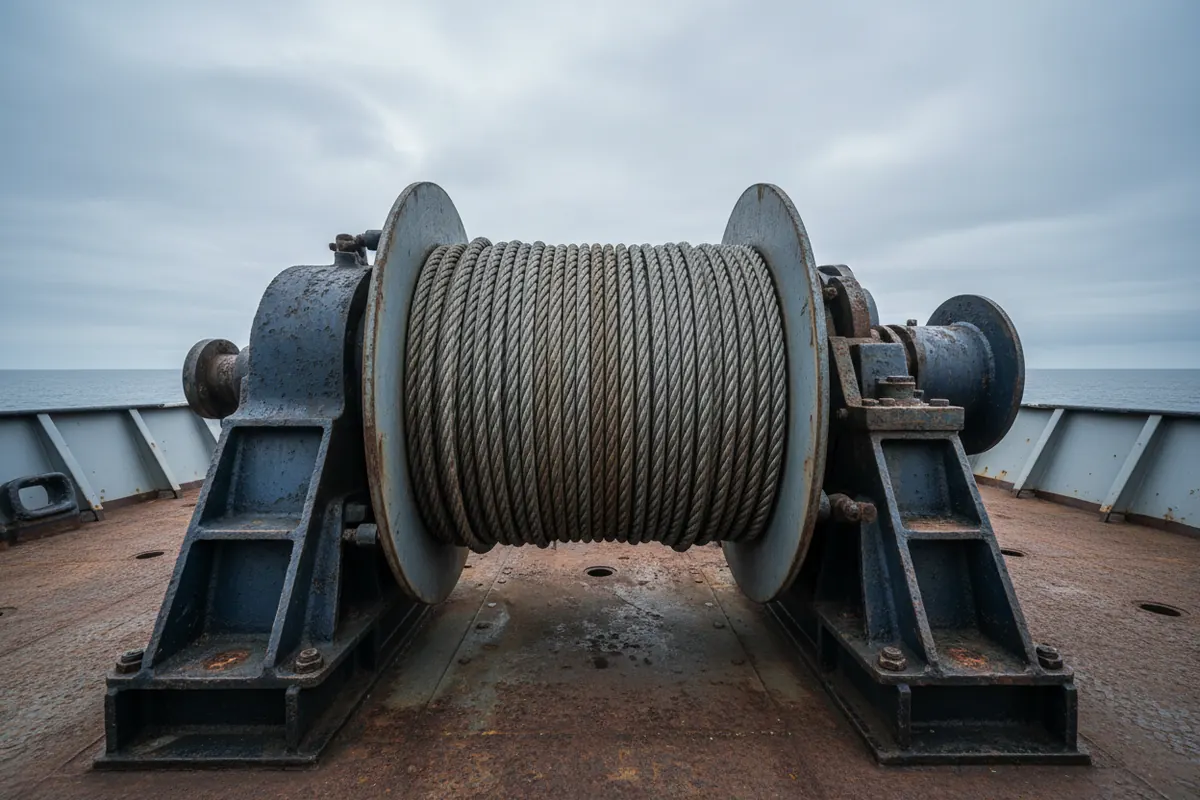
A weathered vessel winch with coiled steel cable resting on an industrial work deck.
Immediate answer

When a winch, crane, line or machine fails aboard a vessel, who may be answerable: the reasonable-fitness rule, Jones Act negligence, product claims and records.

On this page
  1. What 'Equipment Failure' Means Under Maritime Law
  2. Who May Be Answerable When Equipment Breaks or Malfunctions
  3. Why the Gear and Its Records Matter After an Injury
  4. When the Cause of the Failure Points to Different Parties
  5. What an Injured Worker or Family Would Need to Show
  6. How Your Work Status Affects Which Law Applies
  7. Frequently asked questions
  8. Sources

When a winch, crane, line, cable or machine fails aboard a vessel and someone is hurt, federal maritime law may hold the vessel owner, the employer, or the equipment's maker or servicer answerable. Which one depends on the injured person's work status, what failed and why, and whether the gear was reasonably fit for its job.

Most people facing an injury like this are trying to make sense of a moment that happened in seconds: a line that parted, a crane that dropped a load, a winch that kept turning when it should have stopped. If you were hurt this way, or a family member was, you are likely dealing with treatment, time away from work, and a question that no one aboard has answered plainly: was this just bad luck, or did someone have a duty to keep that equipment safe? This page explains the legal standards that apply to equipment failures on vessels, who the law may look to, and why the equipment and its records carry so much weight.

What 'Equipment Failure' Means Under Maritime Law

On a working vessel, "equipment" covers far more than the engine. It includes winches, cranes, booms, lines, cables, blocks, hatches and the machinery that runs them. Maritime law treats much of this gear as part of the vessel itself, through a concept called appurtenances: the equipment, fittings and gear that belong to a vessel and are used in its work.

Two separate legal frameworks usually apply when that gear fails and a seaman is hurt.

The first is the doctrine of unseaworthiness, a duty the vessel owner owes to its crew. In Mitchell v. Trawler Racer, Inc., 362 U.S. 539 (1960), the Supreme Court described that duty as keeping the vessel and its appurtenances reasonably fit for their intended use. The standard is not perfection. For an injured crew member, the question is not whether something went wrong, but whether the gear was in reasonable condition for the work it was doing. This page refers back to that reasonable-fitness standard rather than restating it.

The second is the Jones Act, at 46 U.S.C. § 30104(a). It provides that "a seaman injured in the course of employment or, if the seaman dies from the injury, the personal representative of the seaman may elect to bring a civil action at law, with the right of trial by jury, against the employer." The statute also applies the federal laws governing injuries to railway employees to these actions. That is a negligence claim, aimed at the employer's conduct, while unseaworthiness is aimed at the condition of the vessel and its gear.

The two can sit side by side, but each asks for something different to be shown: one focuses on the state of the equipment, the other on what the employer did or failed to do.

Which law governs a particular injury depends on the facts: where the injury happened, the vessel involved, the waters it was on, and the injured person's status.

Who May Be Answerable When Equipment Breaks or Malfunctions

The law looks to different parties depending on their role, and an equipment failure can involve more than one of them.

The vessel owner is the party that owes the duty of seaworthiness described above. If a crane or winch fell short of the reasonable-fitness standard, the unseaworthiness doctrine points to the owner.

The employer is the party a seaman's Jones Act action runs against under 46 U.S.C. § 30104(a). Often the owner and the employer are the same company, but not always. A crew member may work for an operator or manning company that does not own the vessel, and that difference can change who is named in which claim.

The equipment's maker or servicer may also come into the picture. In East River Steamship Corp. v. Transamerica Delaval Inc., 476 U.S. 858 (1986), the Supreme Court recognized that the general maritime law includes products liability, including strict liability. Products liability is the body of law that addresses injuries caused by a product's condition, and strict liability means responsibility that does not depend on proving carelessness. A claim against a maker or servicer is a separate route from the claims against the owner or employer, covered in more depth on this site's page on third party maritime claims.

For longshore and harbor workers, a different statute applies. Under 33 U.S.C. § 905(b), a covered worker injured "by the negligence of a vessel" may bring an action against the vessel as a third party. That section limits the claim in important ways: the vessel's liability "shall not be based upon the warranty of seaworthiness"; a worker employed by the vessel to provide stevedoring services cannot bring the action if the injury was caused by the negligence of people providing stevedoring services to the vessel; and a worker employed in shipbuilding, repairing or breaking services cannot bring it against an employer that is also the vessel's owner, operator, agent or charterer. The longshore worker injury page explains that path further.

For a family trying to understand the picture, the name on the side of the vessel may not be the only party the law considers. Who owned the gear, who maintained it and who directed the work all bear on the answer.

Why the Gear and Its Records Matter After an Injury

Federal rules require certain events at sea to be reported to the Coast Guard. Under 46 C.F.R. § 4.05-1(a), the owner, agent, master, operator or person in charge must notify the nearest Coast Guard unit, immediately after addressing resulting safety concerns, of marine casualties including a loss of main propulsion, primary steering, or any associated component or control system that reduces the vessel's maneuverability; an occurrence materially and adversely affecting the vessel's seaworthiness or fitness for service or route; a loss of life; and an injury requiring professional medical treatment beyond first aid that, for a person employed aboard a vessel in commercial service, renders them unfit for their routine duties. A written report on Coast Guard Form CG-2692 must follow within five days under 46 C.F.R. § 4.05-10.

Those reports are only one part of the record. In equipment cases, the materials that usually matter include the equipment itself or its broken components, maintenance logs, inspection records, repair histories, incident reports, photos and video of the gear and the scene, the names of people who saw what happened, and medical records documenting the injury. Together they can show what condition the equipment was in before the failure and after.

Federal safety agencies recognize this category of risk. OSHA's maritime industry overview lists "machinery and equipment hazards" among the hazards of the industry, alongside slips, trips and falls, hazardous chemicals, confined or enclosed spaces, and fire hazards.

A Coast Guard investigation serves a different purpose than a lawsuit. Under 46 C.F.R. § 4.07-1(b), these investigations "are for the purpose of taking appropriate measures for promoting safety of life and property at sea, and are not intended to fix civil or criminal responsibility." A separate statute, 46 U.S.C. § 6308(a), provides that no part of a report of a marine casualty investigation conducted under section 6301, including its findings, opinions and conclusions, is admissible as evidence or subject to discovery in civil proceedings, other than an administrative proceeding initiated by the United States.

For an injured worker, that means the Coast Guard's own conclusions are generally not the evidence in a civil case. The underlying equipment, logs and witness accounts carry the weight instead, which is why people in this position often think about where those things are and who has them.

When the Cause of the Failure Points to Different Parties

A failure is not a single kind of event. A cable can part because it was made with a flaw, because its design could not handle the loads it was used for, because no one replaced it when it wore out, or because it was rigged or operated incorrectly. For someone who was standing near that cable, each of those explanations leads to a different set of questions.

A flaw in how a part was made, or a problem with its design, tends to raise products liability questions about the maker, under the East River Steamship rule discussed above.

Wear, poor upkeep, skipped inspections or unsafe operating practices tend to raise questions about the people responsible for the vessel and the work. Those can be framed as Jones Act negligence by the employer, or as unseaworthiness, since gear worn past safe use may fall short of the Mitchell standard.

Some failures involve more than one of these at once. A part with a weakness can also be one that was never inspected.

In practical terms, a maintenance question turns on logs and practices aboard, while a design question turns on the equipment's specifications and history. The fact that gear failed does not, by itself, establish a defect or anyone's fault.

What an Injured Worker or Family Would Need to Show

A maritime negligence claim generally rests on four elements: a duty owed to the injured person, a breach of that duty, causation linking the breach to the injury, and damages. Each element needs support in the evidence.

Each theory asks its own core question. Unseaworthiness asks whether the vessel and its gear met the reasonable-fitness standard. Jones Act negligence asks whether the employer used reasonable care. Products liability under general maritime law asks whether the equipment was defective and whether that condition caused the injury.

Many injured workers worry that a mistake of their own ends the matter. The Jones Act brings in the railway employee rules mentioned earlier, and one of them, 45 U.S.C. § 53, provides that the employee's own contributory negligence "shall not bar a recovery, but the damages shall be diminished by the jury in proportion to the amount of negligence attributable to such employee," and that the employee is not held contributorily negligent where the carrier's violation of a safety statute contributed to the injury. Under that rule, shared fault is weighed rather than treated as a complete bar.

Damages in these cases are described in law by category, such as medical expenses, lost earnings, and pain and suffering, and in a death case, damages the law allows the family. What, if anything, the law may allow in a given case depends on the evidence for each element.

A conversation with an attorney can cover which theory fits what happened, what the available records show, and which questions are still open. If that would help, you can request a case evaluation to talk through the equipment, the incident and the injuries.

How Your Work Status Affects Which Law Applies

Worker status and waterway facts control which law applies, and not every offshore worker is a Jones Act seaman.

A Jones Act seaman is, in general terms, a worker with an employment connection to a vessel in navigation who spends a substantial part of their work aboard it. A seaman's negligence action against the employer runs under 46 U.S.C. § 30104(a), and the unseaworthiness doctrine applies to seamen. The Jones Act lawyer page explains how courts approach that status question, and the commercial fishing injuries page addresses how it applies to crews on fishing boats.

A longshore or harbor worker covered by the Longshore and Harbor Workers' Compensation Act stands in a different position. That worker's action against a vessel under 33 U.S.C. § 905(b) rests on the vessel's negligence, and, as that section states, not on the warranty of seaworthiness.

Workers on platforms and other offshore structures may fall under one of these frameworks, or under neither, as the offshore worker injury page explains.

Status is a threshold question decided on the facts, not by job title. A deckhand, a rigger and a crane operator could each land in a different category depending on where they worked, for whom and aboard what. For someone hurt by failed gear, the wrong classification can change which claims are available, so the details of the job, the vessel and the time spent aboard are often among the first facts a person in this position thinks through.

Free case evaluation

No Fee Unless We Win Your Case

A free case evaluation is how it starts. Tell us what happened, and we’ll help you understand your options. You pay no fee unless we win your case.

Maritime Injury Law Center

How it works

  1. Call us or request a free case evaluationTell us what happened, in your own words.
  2. Talk through your caseYour options, and what your case may be worth.
  3. No fee unless we winYou pay no attorney fee unless we win your case.
Free case evaluation

Tell Us What Happened

Frequently asked questions

What is the unseaworthiness doctrine and how does it apply to equipment failures?

It is the vessel owner's duty to keep the vessel and its gear reasonably fit for their intended use, as Mitchell v. Trawler Racer describes it. For equipment, the focus is the gear's condition, not whether anyone was careless. That makes it different from a negligence claim, though both can be raised over the same failure.

Who can be held responsible for a maritime equipment failure injury?

More than one party may be. The owner, the employer, a maker or servicer, and, for longshore workers, the vessel can each be considered under different rules. When the owner and employer are separate companies, or a contractor serviced the gear, the list can grow. Each party's role decides which theory applies to it.

Does the Jones Act cover injuries caused by defective equipment?

It can, where the employer's negligence played a part, such as in maintaining, inspecting or operating the gear. The Jones Act looks at the employer's conduct. A flaw built into the equipment by its maker raises a separate products question, and the gear's condition may also raise unseaworthiness against the owner.

What records matter most after a maritime equipment failure injury?

The physical equipment and the maintenance history often matter most, because they show the gear's condition over time. Coast Guard investigation reports are a different matter: federal law generally bars them from evidence and discovery in civil cases, which is why the underlying logs, parts, photos and witnesses carry such weight.

Can a maritime worker sue the equipment manufacturer after an injury at sea?

General maritime law recognizes products liability, including strict liability, under East River Steamship. A claim against a maker or servicer is a separate path from claims against an owner or employer, and it can exist alongside them. Whether it fits depends on the equipment's history and how the injury happened.

How does worker status affect a maritime equipment failure claim?

Status decides which rules are available. A seaman may raise Jones Act negligence and unseaworthiness; a covered longshore worker's vessel claim rests on negligence, not seaworthiness. Two people hurt by the same failed crane could therefore stand in very different legal positions.

Are maritime equipment failures required to be reported to the Coast Guard?

Many are. Federal regulations require notice of marine casualties including a loss of main propulsion or primary steering, an occurrence materially affecting seaworthiness, and certain injuries, followed by a written report within five days. The duty to report falls on the owner, agent, master, operator or person in charge, not on the injured worker.

What does 'reasonably fit for intended use' mean for vessel equipment?

It means adequate for the work the gear was meant to do, not flawless. A winch used within its normal job is measured against that job. Whether a piece of gear met the standard on the day of an injury is a question answered by the evidence about its condition.

Sources

Statutes, regulations and court sources

  1. 0146 U.S.C. § 30104 — Personal injury to or death of seamen · GovInfo (U.S. Government Publishing Office)
  2. 0233 U.S.C. § 905 — Exclusiveness of liability · GovInfo (U.S. Government Publishing Office)
  3. 0345 U.S.C. § 53 — Contributory negligence; diminution of damages · GovInfo (U.S. Government Publishing Office)
  4. 0446 U.S.C. § 6308 — Information barred in legal proceedings · GovInfo (U.S. Government Publishing Office)
  5. 0546 C.F.R. § 4.05-1 — Notice of marine casualty · Electronic Code of Federal Regulations
  6. 0646 C.F.R. § 4.05-10 — Written report of marine casualty · Electronic Code of Federal Regulations
  7. 0746 C.F.R. § 4.07-1 — Commandant or District Commander to order investigation · Electronic Code of Federal Regulations

Other sources

  1. 08Maritime Industry - Overview (OSHA) · Occupational Safety and Health Administration