Skip to content
Sheet 38 / 64 · Injury settings

Offshore Platform Injuries: Which Law Applies and What It Means for You

Injury settings

National · Updated November 11, 2026

Free Case Evaluation
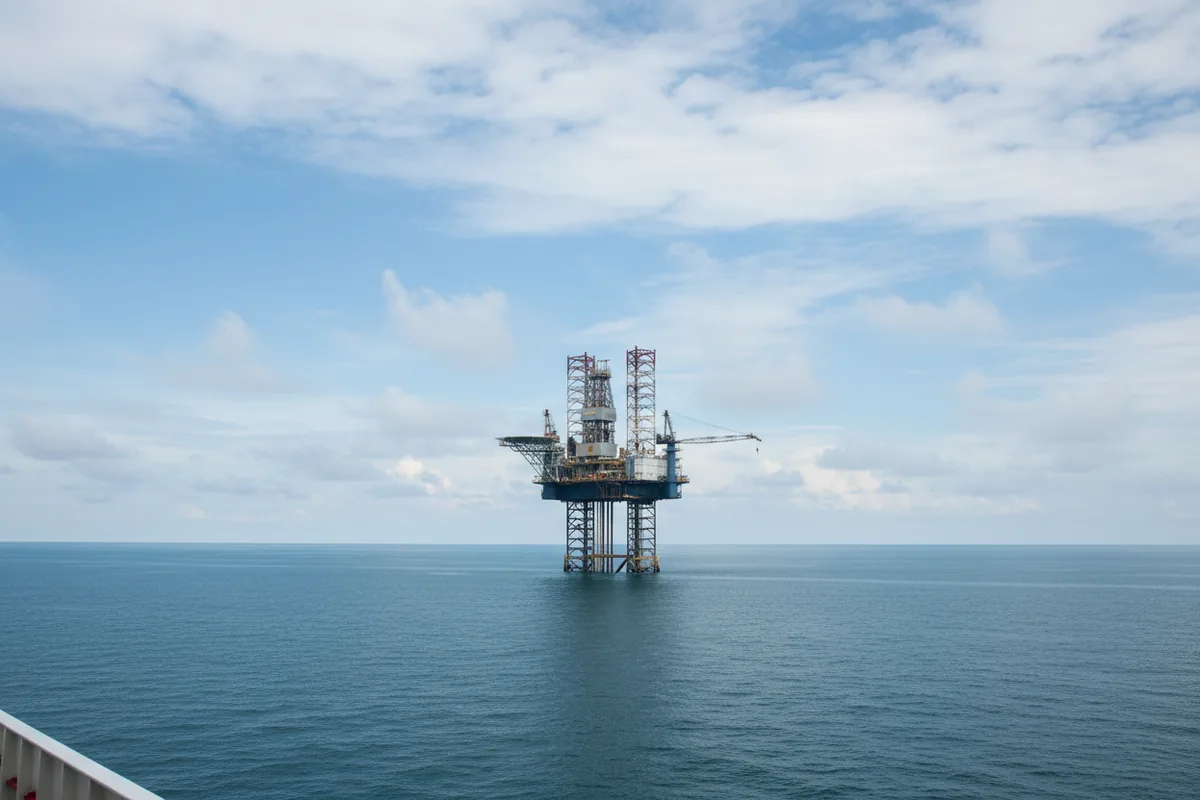
An oil drilling rig standing on open sea, a workplace for many offshore crews.
Immediate answer

How 43 U.S.C. § 1333 brings federal law and the Longshore Act to outer Continental Shelf platforms, and why a floating unit's vessel status can change the analysis.

On this page
  1. Hurt on an Offshore Platform? Why the Type of Structure Matters to You
  2. If Your Platform Was on the Outer Continental Shelf: What 43 U.S.C. § 1333 Says
  3. Compensation Under the Longshore Act for OCS Operations
  4. If You Were Hurt on a Floating Unit: When It May Be a Vessel
  5. Who Investigates an Offshore Platform Casualty
  6. What the Location and Structure of Your Platform May Determine
  7. Frequently asked questions
  8. Sources

If you were hurt on an offshore platform, the law that governs your injury depends mainly on three things: where the structure sits, what kind of structure it is, and your role in the work. A fixed platform on the outer Continental Shelf falls under federal law. A floating unit may be a vessel, which brings different maritime rules into play.

Most people facing an offshore platform injury are dealing with much more than a legal question. There may be a medical evacuation to recover from, weeks away from a job that paid the bills, or, for a family, the loss of someone who left for a work rotation and did not come home. On top of that, the people around you may use words like "OCSLA," "Longshore," and "vessel" without explaining what they mean. This page sets out how federal law treats injuries on fixed and floating offshore structures, why the place and the structure matter, and who investigates when something goes wrong.

Hurt on an Offshore Platform? Why the Type of Structure Matters to You

If you were injured offshore, one of the first questions is simply what you were standing on. The law sorts offshore structures into two broad groups. One is the fixed platform, an installation attached to the seabed and built to explore for, develop or produce resources. The other is the floating unit, such as a mobile offshore drilling unit, often called a MODU, which floats and can be moved from one site to another.

That difference shapes an offshore injury matter from the start, because the law treats a structure attached to the seabed differently from one that floats and moves. Federal law defines a vessel broadly. Under 1 U.S.C. § 3, "The word 'vessel' includes every description of watercraft or other artificial contrivance used, or capable of being used, as a means of transportation on water."

What is at stake is which statute applies, what kind of benefits or claims may be available, and which agency looks into the incident. If the structure is classified as a fixed platform, the federal framework for the outer Continental Shelf is the starting point; if it is classified as a vessel, maritime rules may apply instead. A worker on a fixed production platform and a worker on a floating drilling unit can be in very different legal positions even when the work looks similar.

People in this position often find it helps to write down what they know about the structure: whether it was attached to the seabed or floating, whether it had been moved, and roughly where it was located. A conversation with an attorney can cover which category a particular structure falls into, since the classification depends on the structure itself and how it was being used.

If Your Platform Was on the Outer Continental Shelf: What 43 U.S.C. § 1333 Says

The Outer Continental Shelf Lands Act, usually called OCSLA, is the federal statute that sets the ground rules for structures far offshore. The outer Continental Shelf is the submerged land beyond state waters that falls under federal control.

If you were hurt on a structure out there, 43 U.S.C. § 1333(a) is what places you inside federal law. It extends the Constitution, laws and civil and political jurisdiction of the United States, "to the same extent as if the outer Continental Shelf were an area of exclusive Federal jurisdiction located within a State," to the subsoil and seabed of the outer Continental Shelf; all artificial islands on it; installations and other devices permanently or temporarily attached to the seabed for exploring for, developing or producing resources, including non-mineral energy resources; and any such installation or device, other than a ship or vessel, used to transport or transmit those resources.

The statute also borrows the law of the nearby State, in a specific way. To the extent they are applicable and not inconsistent with OCSLA or with other federal laws and regulations, the civil and criminal laws of each adjacent State are declared to be the law of the United States for the area that would be within that State if its boundaries were extended seaward to the outer edge of the outer Continental Shelf. Federal officers and courts administer and enforce those laws, and the statute says this adoption gives no State any claim of jurisdiction over that area.

For an injured worker, this means a fixed platform on the outer Continental Shelf generally sits in a federal legal framework, not a purely state one. Some state rules may shape a claim, but only as borrowed federal law, only where they fit and do not conflict with federal law, and in federal courts. Whether a given adjacent State's law is borrowed, and which parts of it fit, are questions the facts decide. Where the platform sat relative to the outer Continental Shelf is the starting point for the statute's reach, and it is one of the things an attorney conversation can help sort out.

Compensation Under the Longshore Act for OCS Operations

The second part of the statute addresses workplace injury directly. Under 43 U.S.C. § 1333(b), for disability or death of an employee resulting from any injury "occurring as the result of operations conducted on the outer Continental Shelf for the purpose of exploring for, developing, removing, or transporting by pipeline the natural resources, or involving rights to the natural resources," of its subsoil and seabed, compensation is payable under the Longshore and Harbor Workers' Compensation Act.

The Longshore Act is a federal workers' compensation law. It is its own system, separate from any state's workers' compensation program, and it is the subject of a separate page on longshore worker injury on this site.

The statute draws some lines for this extension. The term "employee" does not include a master or member of a crew of any vessel, or an officer or employee of the United States, of any State or foreign government, or of any of their political subdivisions. An "employer" is one whose employees are employed in these operations. And "United States," used geographically, includes the outer Continental Shelf and the artificial islands and fixed structures on it.

For an injured worker, that crew exclusion matters a great deal. A person who is a member of a vessel's crew is outside this extension and is covered by a different body of law instead. Whether a worker is a seaman is its own question, explained on the page about offshore worker status, and this page does not try to answer it.

A worker or family in this position may want to consider what the employer's operations were and what the injured person's job was, because both bear on whether this compensation framework reaches the injury.

If You Were Hurt on a Floating Unit: When It May Be a Vessel

A floating structure raises a question a fixed platform usually does not: is it a vessel? Under the definition in 1 U.S.C. § 3 quoted above, the test turns on whether the structure is used, or capable of being used, as a means of transportation on water. A floating drilling unit or other floating facility may meet that definition, and whether a particular one does is a legal question that depends on the specific structure and how it was being used.

The answer matters because vessel status can change the analysis. Where a structure is a vessel, workers who meet the legal test for seaman status may have claims under the Jones Act and general maritime law, which are described on the page about Jones Act seamen. Not every person who works on a floating unit is a seaman; worker status is fact-specific, and it is never assumed from the job title or the location alone.

Vessel status also affects how a casualty is classified. Under 46 C.F.R. § 4.03-1, a marine casualty or accident includes any casualty or accident involving a vessel, floating OCS facility, or MODU (mobile offshore drilling unit) when engaged in an OCS activity.

The Supreme Court has also addressed how the Longshore Act extension reaches injuries tied to offshore work. In Pacific Operators Offshore, LLP v. Valladolid, 565 U.S. 207 (2012), the Court affirmed that the Outer Continental Shelf Lands Act extends Longshore Act coverage to an employee who can establish a substantial nexus between his injury and his employer's extractive operations on the outer Continental Shelf.

For a worker, this means the connection between the injury and the employer's offshore operations is part of the question, not only the spot where the injury happened. Someone thinking through their situation may want to weigh how their job tied into those operations.

Who Investigates an Offshore Platform Casualty

Federal agencies, not the parties to a dispute, carry out official investigations offshore. The Bureau of Safety and Environmental Enforcement, known as BSEE, is part of the U.S. Department of the Interior. On its offshore incident statistics page, BSEE states that it "collects offshore incident statistics and uses the results of incident investigations and data analysis to identify incident causes and trends," and that appropriate actions are then identified to reduce the likelihood of recurrence and to enhance safety and environmental protection on the outer Continental Shelf.

The marine casualty definition in 46 C.F.R. § 4.03-1 also applies here. Its list of events is partial, but it includes any fall overboard, injury or loss of life of any person; collision; allision; explosion; fire; and failures or occurrences, regardless of cause, that impair any aspect of operation, components or cargo. A marine casualty, in plain words, is a reportable accident that the regulation brings within federal marine-safety rules.

For a worker or family, an official investigation can be one source for understanding what happened. It is a government process, though, and it runs separately from any legal claim. An investigation record is not a legal finding that anyone is responsible, and what an agency is trying to learn about causes and trends is a different question from what a legal claim requires.

Families often keep whatever they receive about an incident, including any report, correspondence, and the names of people who were present. Injured workers commonly keep their medical records and notes of the dates and the work being done. Those records can matter later, whatever an investigation concludes.

What the Location and Structure of Your Platform May Determine

Taken together, the rules on this page point to one central idea: which law applies depends on the facts, mainly where the injury happened, the character of the structure, the waters it sat in, and the injured person's status. No single answer fits every offshore injury.

Three frameworks may come into play. The first is OCSLA itself under 43 U.S.C. § 1333(a), which brings federal law, and borrowed adjacent-State law as federal law, to the outer Continental Shelf and the structures attached to it. The second is the Longshore Act as extended by § 1333(b), for injuries resulting from the offshore resource operations the statute names. The third is the vessel analysis, where a floating structure qualifies under 1 U.S.C. § 3 and a worker who meets the seaman-status test may come under the Jones Act and general maritime law. In some situations more than one of these may be relevant at once.

A structure that is not on the outer Continental Shelf, such as one in waters closer to shore, falls outside the area § 1333(a) describes, and the governing law there again depends on the facts. Related situations, such as a vessel collision involving a platform or a supply boat, raise their own questions.

The governing law can shape the kinds of claims or benefits that may be available, where a case is heard, and the procedural rules that apply. For someone recovering from an injury, or a family after a death, that can feel like a great deal to hold at once. Many people find it clearer to talk through the structure, the location and their role in the work with someone who knows these rules. If that would help, you can request a case evaluation to discuss how these frameworks may relate to what happened.

Free case evaluation

No Fee Unless We Win Your Case

A free case evaluation is how it starts. Tell us what happened, and we’ll help you understand your options. You pay no fee unless we win your case.

Maritime Injury Law Center

How it works

  1. Call us or request a free case evaluationTell us what happened, in your own words.
  2. Talk through your caseYour options, and what your case may be worth.
  3. No fee unless we winYou pay no attorney fee unless we win your case.
Free case evaluation

Tell Us What Happened

Frequently asked questions

Does federal law apply to every offshore platform injury?

No single rule covers every offshore injury. 43 U.S.C. § 1333 extends federal law to the seabed of the outer Continental Shelf and to structures attached to it there. Injuries in other waters, or on a floating unit that qualifies as a vessel, can bring different rules into play, so the location and the structure both matter.

What is the Outer Continental Shelf Lands Act and how does it affect an offshore injury claim?

It is the federal statute that treats the outer Continental Shelf as an area of federal jurisdiction. One practical effect is that state law, where it is borrowed, operates as federal law and is enforced by federal officers and courts, rather than as an independent state rule.

Can a floating offshore drilling unit be treated as a vessel?

It can. Under 1 U.S.C. § 3, a vessel includes any artificial contrivance used, or capable of being used, as a means of transportation on water. Whether a particular unit meets that test is a legal question about that structure and how it was used, and the answer affects which framework applies.

What does the Longshore and Harbor Workers' Compensation Act cover for OCS workers?

Through 43 U.S.C. § 1333(b), it provides federal compensation for disability or death from injuries resulting from the offshore resource operations the statute names. It is separate from state workers' compensation. Coverage turns on the operations and the worker's role, and the extension excludes a master or crew member of a vessel.

What is a marine casualty under federal regulations?

Under 46 C.F.R. § 4.03-1, it includes a casualty involving a vessel, floating OCS facility or MODU engaged in an OCS activity. The definition is broad: its list of events includes injuries, fires, explosions and failures that impair operations, regardless of cause.

What does BSEE do after an offshore platform incident?

BSEE states on its offshore incident statistics page that it collects incident statistics and uses investigation results and data analysis to identify causes and trends. Its purpose is safety and prevention. Its records can help show what happened, but they are not a legal finding of responsibility.

Does the Jones Act apply to offshore platform workers?

Only to workers who qualify as seamen, which depends on a worker's connection to a vessel. Working offshore does not by itself make someone a seaman. That status question has its own page on this site, covering offshore worker status in detail.

Sources

Statutes, regulations and court sources

  1. 0143 U.S.C. § 1333 — Laws and regulations governing lands (govinfo.gov) · GovInfo (U.S. Government Publishing Office)
  2. 021 U.S.C. § 3 — "Vessel" as including all means of water transportation (govinfo.gov) · GovInfo (U.S. Government Publishing Office)
  3. 0346 C.F.R. § 4.03-1 — Marine casualty or accident (eCFR) · Electronic Code of Federal Regulations

Other sources

  1. 04Offshore Incident Statistics — Bureau of Safety and Environmental Enforcement · bsee.gov