
Skip to content
Sheet 12 / 64 · Worker claims

Jones Act Seaman: Who Qualifies and Why That Status Matters After an Injury

Worker claims

National · Updated November 10, 2026

Free Case Evaluation
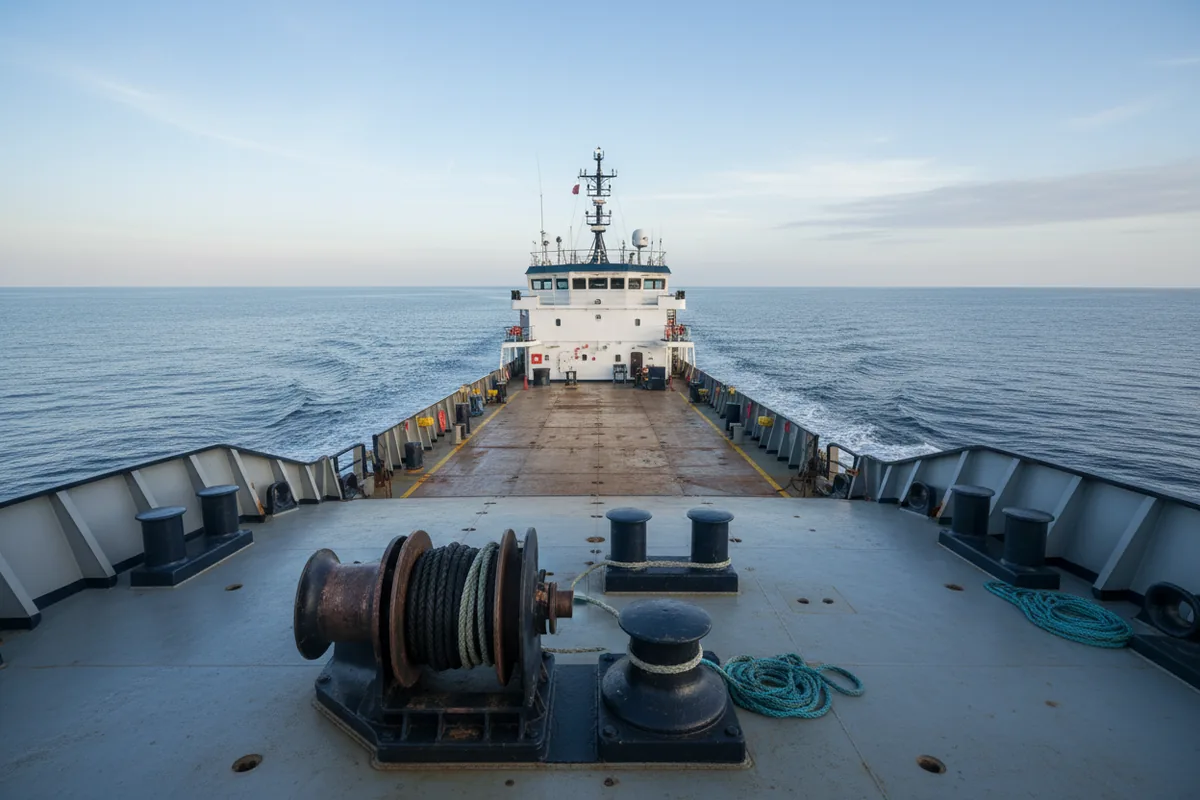
The working deck of an offshore supply vessel where seaman status is earned.
Immediate answer

Who counts as a Jones Act seaman: the Supreme Court's two-part test, the 30 percent guideline, the federal vessel definition and the line between crew and longshore.

On this page
  1. What a Jones Act Seaman Is Under Federal Law
  2. The Two-Part Test: What Courts Look At to Decide Seaman Status
  3. What Counts as a Vessel — and Why the Definition Matters for Your Claim
  4. How Seaman Status Differs from Longshore and Harbor Worker Status
  5. What Seaman Status Opens Up — and What It Does Not Decide
  6. Questions Worth Asking Before Assuming You Are — or Are Not — a Seaman
  7. Frequently asked questions
  8. Sources

A Jones Act seaman is a maritime worker whose job contributes to a vessel's function or mission and whose connection to a vessel in navigation is substantial in both how long it lasts and what it involves. Seaman is a legal status, not a job title. It decides whether an injured worker can sue the employer under federal maritime law.

Most people facing this question are dealing with something concrete: a fall on deck, a crushed hand in a winch, a back injury on a barge, or a phone call telling a family that someone did not come home from a hitch offshore. On top of the medical bills and the missed paychecks comes a word that seems to change everything, "seaman," and nobody has explained plainly what it means or why the employer, the insurer and the paperwork keep coming back to it. This page walks through who counts as a seaman under federal maritime law, how the Supreme Court's test works, what a vessel is, and how crew members are separated from longshore and harbor workers.

What a Jones Act Seaman Is Under Federal Law

The Jones Act gives injured seamen a right to sue. Under 46 U.S.C. § 30104, "A seaman injured in the course of employment or, if the seaman dies from the injury, the personal representative of the seaman may elect to bring a civil action at law, with the right of trial by jury, against the employer."

That sentence uses the word "seaman" but does not define it. The Supreme Court filled the gap in Chandris, Inc. v. Latsis, 515 U.S. 347 (1995). The Court set out a two-part test: the worker's duties must contribute to the function of the vessel or to the accomplishment of its mission, and the worker must have a connection to a vessel in navigation, or an identifiable group of vessels, that is substantial in terms of both its duration and its nature.

So seaman status is a legal classification, not a rank. A deckhand, a cook, an engineer and a tankerman can all qualify. Someone with "deckhand" on a pay stub may not, if the work itself does not meet the test. The question is what the person actually did and how tied to a vessel that work was.

The word "vessel" has its own federal definition, covered below. For a worker trying to make sense of an injury, the practical point is this: before anyone talks about fault, the first question is which body of law even applies. Which law applies depends on the facts, including where the injury happened, the vessel, the waters and the injured person's status. A worker or family may want to start by writing down, in their own words, what the job involved day to day, because that description is the raw material of the test.

The Two-Part Test: What Courts Look At to Decide Seaman Status

Each part of the Chandris test does different work, and a worker has to meet both.

The first part asks whether the worker's duties contribute to the function of the vessel or to the accomplishment of its mission. This is a broad threshold. The U.S. Department of Labor's Longshore program describes it the same way: it is not necessary that an employee aid in navigation or contribute to the transportation of the vessel, but the employee must be doing the ship's work. A galley worker, a crane operator on a work barge, or someone running equipment that serves the vessel's job may contribute to its mission without ever steering it. For many crew members, this part is not where the dispute lies.

The second part is usually harder. The connection to a vessel in navigation, or to an identifiable group of vessels, must be substantial in both duration and nature. Both matter. A long but loose tie is not enough, and neither is a short but intense one. An identifiable group of vessels generally means something like a fleet under common ownership or control, so a worker who rotates among one company's boats may still have the kind of connection the test asks about. A worker whose connection to a vessel is transient or incidental does not satisfy the test.

The Court also spoke about time. It said that a worker who spends less than about 30 percent of working time in the service of a vessel in navigation should generally not qualify, and it called that figure no more than a guideline. It is a rule of thumb for courts, not a fixed threshold, and the nature of the connection still counts.

For someone whose work splits between shore and vessel, this is where the facts carry the most weight. How the hours divided, and whether the vessel work was the core of the job or occasional, are the details a worker or family may want to reconstruct as accurately as they can.

What Counts as a Vessel — and Why the Definition Matters for Your Claim

Federal law defines the term in 1 U.S.C. § 3: "The word 'vessel' includes every description of watercraft or other artificial contrivance used, or capable of being used, as a means of transportation on water."

The definition is wide. It reaches ships and tugs, and it can reach barges, work boats and some floating structures that would not look like a "ship" to most people. The key words are "used, or capable of being used, as a means of transportation on water." This is a federal statutory question, decided under federal law, not under any state's law.

Chandris adds a second layer: the connection must be to a vessel in navigation. A vessel that has been taken out of service, such as one in drydock for major work or one permanently moored and withdrawn from navigation, may not count for this purpose. That can matter a great deal after an injury that happened during a long repair period or on a structure fixed in place.

If you were hurt on a floating platform, a drillship or a vessel undergoing repair, the type of structure and its status on the day of the injury are not side details; they can decide whether the vessel part of the test is met at all. Offshore work is a good example of why no single answer fits everyone: some offshore workers are seamen and many are not, and the structure involved is often the dividing line. The same questions come up on barge accidents and in vessel deck fall injuries, where the vessel's status shapes the route a claim takes.

Records that show what the structure was, whether it moved, and whether it was in active service when the injury happened tend to carry real weight here.

How Seaman Status Differs from Longshore and Harbor Worker Status

The U.S. Department of Labor's Longshore and Harbor Workers' Compensation Act FAQ states that the Jones Act and the Longshore Act "are mutually exclusive regimes providing compensation for work-related injuries suffered by different categories of maritime employees."

The dividing line is written into the Longshore Act itself. Under 33 U.S.C. § 902, paragraph (3), a covered "employee" means any person engaged in maritime employment, including longshoremen and harbor-workers such as ship repairmen, shipbuilders and ship-breakers, but the term does not include "a master or member of a crew of any vessel." The same paragraph lists other exclusions too, including certain office, recreational, marina and aquaculture workers, but those exclusions apply only "if individuals described in clauses (A) through (F) are subject to coverage under a State workers' compensation law."

The Department of Labor's FAQ explains that "master or member of a crew" is a refinement of the Jones Act word "seaman," and that the determination "turns solely on the employee's connection to a vessel in navigation." In plain terms: crew members fall under the Jones Act; longshore workers, harbor workers and ship repairers typically fall under the Longshore and Harbor Workers' Compensation Act, often called the LHWCA, which the FAQ describes as a federal law providing compensation, medical care and vocational rehabilitation for covered workers.

This line matters because each system works differently. One is a lawsuit against the employer; the other is a compensation program run through the Department of Labor. Where the line falls is a legal and factual question, and the same kind of job can land on either side depending on the specific facts. Longshore workers have their own page on this site, as do injuries at the vessel-to-dock edge, where the two systems most often meet. A family trying to understand which side applies may want to look closely at whether the worker was assigned to a vessel's crew or came aboard to do a discrete job.

What Seaman Status Opens Up — and What It Does Not Decide

Seaman status is a gateway. Once a worker qualifies, 46 U.S.C. § 30104 gives the right to bring a civil action against the employer with a jury trial, a claim usually called Jones Act negligence. The same section says that laws regulating recovery for injured railway workers apply. One of those laws, 45 U.S.C. § 53, provides that an employee's own contributory negligence "shall not bar a recovery," though damages are reduced in proportion to the employee's share of fault, with an exception where the employer's violation of a safety statute contributed to the injury.

Seamen may also have two other routes under the general maritime law: unseaworthiness, which concerns the condition of the vessel and its equipment, and maintenance and cure, an employer's obligation toward a seaman who is hurt or falls ill in the vessel's service. Each has its own legal standard and its own page on this site. The Jones Act lawyer page explains how these claims fit together.

What status does not do matters just as much. Being a seaman does not establish that the employer did anything wrong, that the vessel was unseaworthy, or what, if anything, a worker may recover. Those questions turn on what happened, who controlled the work and the equipment, and the evidence. The rules depend on the facts and the law that applies.

For a worker or a grieving family, this means the status question comes first but is not the end of the story. If it would help to talk through how the two-part test lines up with a particular work history and vessel assignment, you can request a case evaluation and discuss it with our attorney.

Questions Worth Asking Before Assuming You Are — or Are Not — a Seaman

People sometimes assume their status from a job title, a union card or what a supervisor said. The test asks different questions, and it can cut either way.

The Chandris factors, put as plain questions, look like this. Did the worker's duties contribute to the vessel's function or the accomplishment of its mission? Was the connection to a vessel in navigation, or to an identifiable group of vessels under common ownership or control, substantial in both duration and nature? Was that connection lasting, or transient and incidental? Was the vessel in navigation, or was it drydocked or withdrawn from service? How much working time was spent in the vessel's service, keeping in mind that the Court's figure of about 30 percent is no more than a guideline?

Answering those questions usually depends on paper and memory together. The records that tend to bear on status include employment and payroll records, vessel assignment records, crew lists, duty or watch logs, time-aboard or hitch records, and the job description the employer used. Coworkers who saw the daily routine can fill in what the paperwork leaves out. If you were hurt, these records describe the shape of your work in a way that a title alone cannot.

The determination itself is legal and factual, made against the full record, and this page does not say whether any particular person is or is not a seaman. A worker who does not meet the test is not left without a framework: the LHWCA covers many maritime workers, and offshore workers may fall under other systems that have their own page on this site. Getting the category right, in either direction, shapes every option that follows.

Free case evaluation

No Fee Unless We Win Your Case

A free case evaluation is how it starts. Tell us what happened, and we’ll help you understand your options. You pay no fee unless we win your case.

Maritime Injury Law Center

How it works

  1. Call us or request a free case evaluationTell us what happened, in your own words.
  2. Talk through your caseYour options, and what your case may be worth.
  3. No fee unless we winYou pay no attorney fee unless we win your case.
Free case evaluation

Tell Us What Happened

Frequently asked questions

What type of occupation is a seaman?

No single occupation is a seaman. Cooks, engineers, deckhands and some specialized workers can all qualify, while someone with a seafaring title may not. The label follows the work: whether it serves the vessel's function or mission and keeps the worker substantially tied to a vessel in navigation.

What is the Jones Act shipping regulation?

People often confuse two laws that share the name. The part that matters to injured workers, 46 U.S.C. § 30104, is not a shipping rule. It gives an injured seaman, or a deceased seaman's personal representative, the right to bring a civil action against the employer, with the right of trial by jury.

What is maritime employer liability under the Jones Act?

The statute lets a seaman injured in the course of employment sue the employer and borrows the laws that govern injured railway workers. What the employer must have done or failed to do is the subject of Jones Act negligence, which has its own page on this site.

Does the Jones Act apply to all maritime workers?

No. Working on or near the water is not enough. Many maritime workers, including longshore workers, harbor workers and ship repairers, are typically covered by the LHWCA instead, and offshore workers do not all share one status.

What is the difference between a Jones Act seaman and a longshore worker?

The difference is the tie to a vessel. A seaman belongs to a vessel's crew in a lasting way; a longshore worker typically comes aboard or works dockside to load, unload, repair or build. The LHWCA's definition of employee leaves out a master or member of a crew of any vessel.

How much time aboard a vessel does a worker need to qualify as a seaman?

There is no fixed number. The Court used about 30 percent of working time in a vessel's service as no more than a guideline. Time aboard is weighed together with the nature of the connection, so a stopwatch count alone does not settle status.

What does 'vessel in navigation' mean for Jones Act purposes?

It combines two ideas. The structure must be a watercraft or contrivance used, or capable of being used, for transportation on water, and it must be in navigation rather than withdrawn from service. A worker's status can turn on what the structure was doing at the time.

Can a worker be covered by both the Jones Act and the Longshore Act?

Not for the same work. The Department of Labor describes the two as mutually exclusive regimes for different categories of maritime employees. Which one applies depends on the worker's connection to a vessel in navigation and the facts of the injury.