Skip to content
Sheet 21 / 64 · Vessels

Barge Accident Lawyer: What Injured Workers and Families Need to Know

Vessels

National · Updated November 10, 2026

Free Case Evaluation
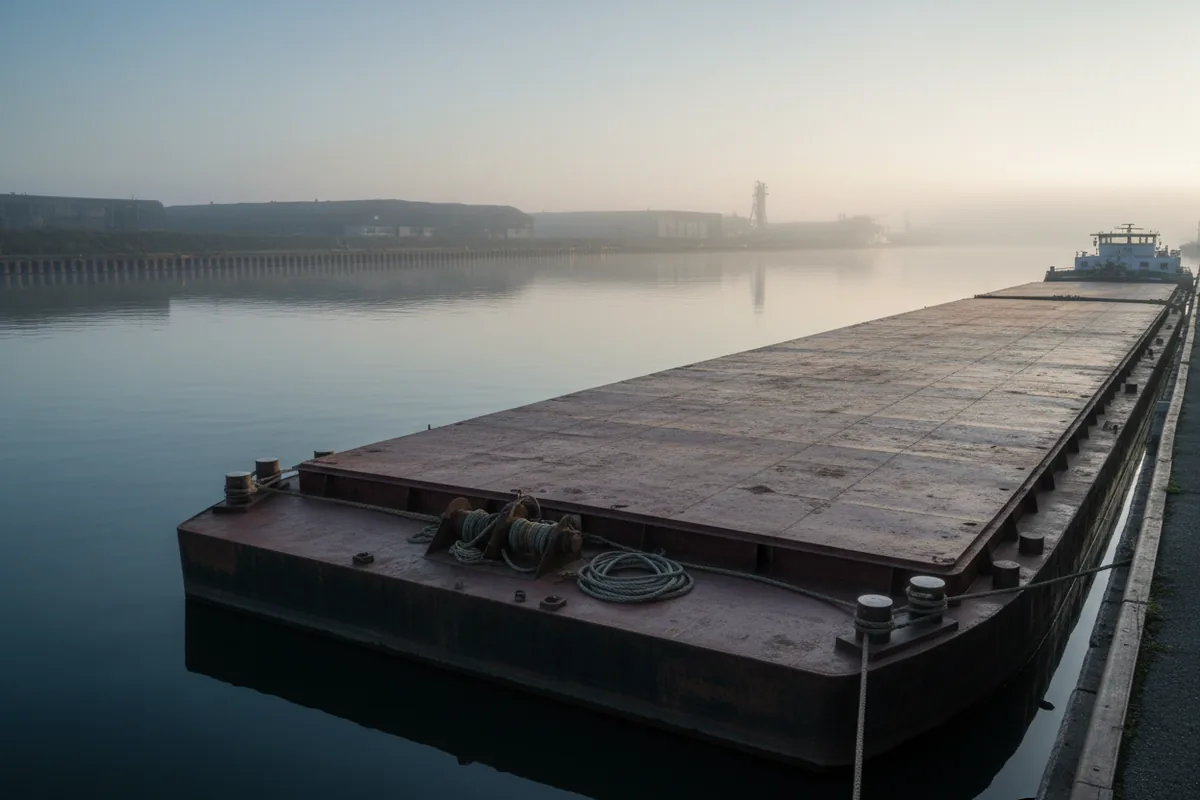
An empty flat-deck barge moored on a calm industrial waterway at dawn.
Immediate answer

How a barge injury claim works: Jones Act vs. longshore rights, the owner's six-month limitation window, the Coast Guard CG-2692A report, and records that matter.

On this page
  1. Key Takeaways
  2. Which Law Covers Your Barge Accident Claim
  3. If You Were Hurt During Tow Makeup, Rigging, or on a Slick Deck
  4. Who May Be Responsible When a Barge Worker Is Hurt
  5. The Limitation of Liability Fund: What It Means for Your Claim
  6. Evidence That Usually Matters in a Barge Accident Case
  7. If You Are Living With a Barge Injury: What the Law May Allow
  8. Why Where the Accident Happened Can Change Your Claim
  9. Questions Worth Asking Before You Speak With a Maritime Attorney
  10. Frequently asked questions
  11. Sources

If you were hurt working on or around a barge, federal maritime law usually decides your rights, not ordinary injury law. A seaman may sue the employer under the Jones Act; a longshore or harbor worker may sue a negligent vessel. The vessel owner may also ask a federal court to cap its liability at the vessel's value.

If you are a deckhand who was caught in a line during tow makeup, a tankerman hurt on a slick deck, or a family member sitting with the news that someone did not come home from a fleeting job, you are probably carrying more than one worry at once: the injury itself, the paychecks that stopped, and a company that may already have its own version of what happened. Most people facing a barge injury have never heard the words "seaman status" or "limitation of liability" until the week they need them. This page walks through those words in the order they tend to matter: which law applies, how these accidents happen, who may be answerable, the owner's right to seek a cap, the records, the injuries and the law's categories of damages, and why the waters and the state still matter.

Key Takeaways

The first question in a barge case is usually not "who was careless" but "what kind of worker was this." That answer sorts everything else.

  • Two different federal paths exist. A seaman injured in the course of employment may bring a jury action against the employer under 46 U.S.C. § 30104(a). A worker covered by the Longshore and Harbor Workers' Compensation Act may sue a vessel for the vessel's own negligence under 33 U.S.C. § 905(b). They are not interchangeable, and a person does not choose between them by preference.
  • The barge itself is part of the money question. The federal limitation chapter expressly reaches barges, and it can hold an owner's liability to the value of the vessel and pending freight.
  • Paperwork starts on the water. The Coast Guard's written casualty report, Form CG-2692 with its Barge Addendum, Form CG-2692A, is filed by the owner, operator or person in charge, not by the injured worker.
  • The Coast Guard's own investigation is a safety inquiry. Its regulations say its investigations are not intended to fix civil or criminal responsibility, and a federal statute bars its investigation reports from most civil cases.
  • Federal maritime law sets the frame, but limitation periods, fault rules and damages rules differ by state where state law has a role, and no state's rule is the rule everywhere.

Every one of these rules depends on the facts and the law that applies to the particular accident. That caveat is stated once here because it runs underneath the whole page.

Which Law Covers Your Barge Accident Claim

A Jones Act claim belongs to a seaman. The statute, 46 U.S.C. § 30104(a), says that "a seaman injured in the course of employment or, if the seaman dies from the injury, the personal representative of the seaman may elect to bring a civil action at law, with the right of trial by jury, against the employer." It adds that the laws of the United States governing injury to railway employees apply to that action. Those railway laws hold a carrier liable for injury "resulting in whole or in part" from negligence, under 45 U.S.C. § 51.

A longshore claim works differently. Under 33 U.S.C. § 905(b), a person covered by the Longshore Act who is injured "caused by the negligence of a vessel" may bring an action against the vessel as a third party. The same subsection says the vessel's liability "shall not be based upon the warranty of seaworthiness," bars the action against the vessel in some stevedoring situations, bars it against an employer who also owns or operates the vessel when the worker was doing shipbuilding, repair or breaking work, and makes that remedy exclusive of other remedies against the vessel except those in the Act.

What this means for you: the same deck injury can lead to a claim against your employer, a claim against the vessel, or both, depending on your job. Worker status and waterway facts control which path applies, and not every person who works on a barge, a dock or offshore is a Jones Act seaman. A fleet deckhand assigned to a tow and a shoreside worker loading a hopper barge at a terminal may be standing on the same steel and still be on different legal roads.

What you may want to weigh is what your actual job was at the time: who paid you, what vessel or fleet you were assigned to, and how much of your work happened aboard. Sorting those facts against these two statutes is a large part of what a first conversation with an attorney can cover.

If You Were Hurt During Tow Makeup, Rigging, or on a Slick Deck

The work you were doing when you were hurt often depends on the kind of barge you were on. If you work tank barges as a tankerman, your job involves connecting hoses, opening and closing valves and monitoring loading and discharge of liquid cargo in enclosed tanks. If you work hopper barges, you move covers over open or covered holds of dry bulk cargo and walk decks that run along narrow edges. On a deck barge, you work around equipment or cargo lashed on a flat surface. On all three, deckhands build and break tows, handle lines and work among cleats, kevels and wires.

Tow makeup and rigging account for many of the serious injuries. Lines and wires are put under heavy tension to lash barges together or to a towboat; a part that fails, a ratchet that slips or a load that shifts can bring force to bear on whoever is nearest. Caught-between injuries happen when barges move against each other or against a dock while someone is between them.

Walking surfaces are the other recurring theme. Gratings, gangways, hatch covers and narrow decks become dangerous when wet, oily, covered with cargo residue, poorly lit or missing a guard. Mooring and fleeting operations add moving water, changing light and the need to step between barges.

Why these conditions matter legally: a negligence claim asks whether someone owed a duty, breached it, and whether that breach caused the injury and the losses. Equipment condition, lighting, staffing and the way a task was planned bear on those questions. An injury on a barge does not by itself show that anyone was at fault; whether the conditions in a specific accident meet the legal standard depends on what happened.

What is at stake for you: the specific mechanism of your injury, such as a slipped ratchet or an unlit grating, is often the fact a claim is built around. If you remember the gear involved, the lighting or who planned the task, those details are part of what a conversation with an attorney can help connect to the legal standard. Tugboats and towboats raise their own questions, which this site treats on its own page.

Who May Be Responsible When a Barge Worker Is Hurt

Many families reasonably wonder why there is more than one company in the picture. On a barge, ownership, operation and employment are often split.

The vessel owner holds title to the barge. A longshore worker's claim under 33 U.S.C. § 905(b) runs against the vessel for its negligence, and an owner is also the party the limitation statutes discussed below protect. For a seaman, claims about the vessel's condition, which maritime law calls seaworthiness, may also involve the owner.

An operator or charterer may control the barge day to day without owning it: deciding how a tow is built, who works it and when. Operational control can be a basis for responsibility when the way the work was run is in question.

The employer is the defendant the Jones Act names. Under 46 U.S.C. § 30104(a), the seaman's action is "against the employer," which may or may not be the company that owns the barge.

An equipment manufacturer or seller may be involved where a component such as a winch, ratchet, wire or hatch cover is claimed to be defective. Product law generally asks whether the item was defective and whether the defect caused the injury; a failure alone does not prove a defect.

A maintenance or repair contractor may be involved where work done on the barge or its gear is claimed to have been done negligently.

Identifying these roles early matters because each one points to a different statute, a different kind of proof and sometimes a different court. If you were hurt, you may not know who owned the barge you were standing on; that is a common starting point, and it is one of the facts a conversation with an attorney can help untangle.

The Limitation of Liability Fund: What It Means for Your Claim

The limitation chapter of the U.S. Code reaches barges by name. Under 46 U.S.C. § 30502(a), except as otherwise provided, the chapter "applies to seagoing vessels and vessels used on lakes or rivers or in inland navigation, including canal boats, barges, and lighters."

The cap itself is in 46 U.S.C. § 30523(a): except as provided in section 30524, "the liability of the owner of a vessel" for the claims described in subsection (b) "shall not exceed the value of the vessel and pending freight." Subsection (b) lists, unless otherwise excluded by law, claims arising from loss or destruction of property shipped aboard, loss, damage or injury by collision, and any act, matter or thing done or incurred "without the privity or knowledge of the owner." Where a vessel has several owners, each owner's share is limited to that owner's proportionate interest.

The timing rule is in 46 U.S.C. § 30529. The owner may bring a civil action for limitation in a federal district court, and "the action must be brought within 6 months after a claimant gives the owner written notice of a claim." Once the action is brought and the owner has complied with the statute's requirements for the fund, "all claims and proceedings against the owner related to the matter in question shall cease."

What this means for an injured worker or family: a limitation action can pull every claim against the owner into one federal case and tie the amount available from that owner to the value of the barge and its pending freight. The statute's "privity or knowledge" language is where many of these disputes are fought, and the statute does not promise either side the result.

What you may want to weigh is when written notice of a claim was given and whether a limitation action has already been filed. Those dates sit at the center of this procedure.

Evidence That Usually Matters in a Barge Accident Case

Records about a barge accident start being made almost immediately, and many of them are made by others. Under 46 C.F.R. § 4.05-1, the owner, agent, master, operator or person in charge must notify the Coast Guard after reportable casualties, including a loss of life and an injury that requires professional medical treatment beyond first aid and, for a person employed aboard a vessel in commercial service, renders the person unfit for routine duties. Under the same regulations, the same parties must, within 5 days, file a written report on Form CG-2692, supplemented as necessary by Form CG-2692A (Barge Addendum), CG-2692B (chemical testing), CG-2692C (Personnel Casualty Addendum) and CG-2692D (Involved Persons and Witnesses Addendum). The regulations' definition of a marine casualty includes any fall overboard, injury or loss of life. One reporting exclusion moves certain shipyard and harbor worker injuries to OSHA reporting instead.

A distinction matters here. The Coast Guard's own investigation is for promoting safety and "not intended to fix civil or criminal responsibility," under 46 C.F.R. § 4.07-1, and under 46 U.S.C. § 6308 no part of a marine casualty investigation report is admissible or subject to discovery in civil proceedings, other than an administrative proceeding brought by the United States. That makes the other records more important.

If you were hurt, the records that usually matter include the employer's or operator's incident report, vessel logs, maintenance and inspection records for the equipment involved, photographs and video of the scene, the gear and the injury, the names of crew and witnesses, and medical records from the first treatment onward. Injured workers and families often keep copies of anything they were handed or asked to sign. These records show the barge's condition and the sequence of events while the details are fresh.

A seaman who reports a work injury to the vessel owner is protected against discharge or discrimination for that report under 46 U.S.C. § 2114, which also protects cooperation with a Coast Guard or NTSB safety investigation. If you are unsure which records exist and who holds them, that is something you can talk through when you request a case evaluation.

If You Are Living With a Barge Injury: What the Law May Allow

If you were hurt on a barge, your injury likely traces back to one of the mechanisms above. Lines, wires and barges moving against each other cause crush and caught-between injuries. Falls from decks, gratings, hatch covers and gangways cause fractures, spinal injuries and traumatic brain injuries. Burns can come from cargo or fuel. A fall between barges or overboard can end in drowning. For someone in the middle of treatment, the injury is the whole world; the law's categories come second, and they are described here only so they are not a surprise later.

For a seaman, the Jones Act borrows the railway statute's damages framework. That framework, in 45 U.S.C. § 53, uses comparative fault: the worker's own negligence does not bar recovery, but damages "shall be diminished by the jury in proportion to the amount of negligence attributable to such employee," and the worker's negligence is not counted at all where the employer's violation of a safety statute contributed to the injury or death. Under 45 U.S.C. § 54, the worker is not held to have assumed the risks of the job where negligence contributed to the injury.

What this means for you: if a company suggests the accident was partly your own fault, under this framework that argument generally goes to reducing damages, not erasing the claim.

The categories of damages courts consider in injury cases generally include past and future medical expenses, lost wages and lost earning capacity, and pain and suffering. A seaman may also have a separate right known as maintenance and cure: a living allowance while recovering (maintenance) and payment for medical care (cure) for an injury or illness in the service of the vessel, which exists apart from any negligence claim.

A wrongful death claim is a claim brought after a person dies from an injury. Under the Jones Act, it is brought by the seaman's personal representative; the railway statute directs damages to the surviving spouse and children, then parents, then dependent next of kin.

Which categories apply, and whether any are available, depends on which statute governs, the facts, and the law that applies. Nothing on this page says what any claim is worth. Medical records from the first treatment onward, and a record of missed work, are the kinds of facts a conversation with an attorney can help match to these categories.

Why Where the Accident Happened Can Change Your Claim

Federal law supplies the backbone here: the Jones Act, the longshore vessel-negligence action and the limitation statutes. For an injured worker or family, federal law also sets a general deadline: under 46 U.S.C. § 30106, "except as otherwise provided by law," a civil action for personal injury or death arising out of a maritime tort "must be brought within 3 years after the cause of action arose." Because of that "except" clause, and the separate six-month window for an owner's limitation action, the three-year period is not a universal deadline for every claim that grows out of a barge accident.

State law can still matter. Where a claim falls outside maritime law, or where state law fills a gap, limitation periods, fault rules, damages rules and wrongful-death rules differ from state to state, and no state's rule is the rule everywhere. A contractor or manufacturer claim may raise state-law questions that a Jones Act claim against an employer does not.

The stakes are practical. An assumption about which law applies can affect the time for bringing a claim, the court it belongs in and the categories of damages the law allows. Federal investigations can add another layer: the NTSB investigates major marine casualties on U.S. navigable waters or involving U.S. vessels under 49 U.S.C. § 1131.

Inland waterways and towing vessels each raise their own jurisdictional questions, which this site addresses on separate pages. What you may want to weigh is where exactly the accident happened, what waters were involved, and what the worker's status was that day, since those three facts tend to steer the rest.

Questions Worth Asking Before You Speak With a Maritime Attorney

Before a conversation, it can help to have the basic facts in one place, even if some are rough. People in this position often gather:

  • what the worker's job and assignment were at the time, and the name of the employer;
  • the type of barge (tank, hopper or deck), the work being done and where the barge was;
  • the names of the vessel owner and operator, if known;
  • any incident report received, medical records and the names of witnesses.

The questions people tend to bring are the ones this page raises: which statute may apply to the situation, whether a limitation action has been filed and when written notice of a claim was given, and what timeline governs. What is at stake in gathering these facts is that worker status decides which statute applies, and the date of written notice frames the owner's six-month limitation window; missing pieces are common, and identifying them is part of what a first conversation can do.

This page is written for workers on commercial barges and their families. Recreational boating accidents raise different questions: whether maritime law applies at all to a boating, propeller, yacht, parasailing, jet ski or scuba incident is fact-specific, and many such incidents are governed by state law. This page does not set out any state's deadlines, and it gives no medical advice.

Free case evaluation

No Fee Unless We Win Your Case

A free case evaluation is how it starts. Tell us what happened, and we’ll help you understand your options. You pay no fee unless we win your case.

Maritime Injury Law Center

How it works

  1. Call us or request a free case evaluationTell us what happened, in your own words.
  2. Talk through your caseYour options, and what your case may be worth.
  3. No fee unless we winYou pay no attorney fee unless we win your case.
Free case evaluation

Tell Us What Happened

Frequently asked questions

What is the difference between a Jones Act claim and an LHWCA claim for a barge worker?

The difference is the defendant and the worker. A Jones Act claim is a seaman's jury action against the employer. A longshore claim under 33 U.S.C. § 905(b) runs against the vessel for its own negligence and cannot rest on seaworthiness. Which applies depends on the worker's status and assignment, not on job title alone.

What is limitation of liability and how does it affect a barge accident claim?

It is an owner's federal procedure for holding its liability to the value of the vessel and pending freight. Because a barge is often worth less than the harm it can cause, the procedure can shape the whole case. The owner must file within six months of written notice of a claim; whether limitation succeeds is not assured either way.

What records does the Coast Guard require after a barge accident?

The owner, agent, master, operator or person in charge files Form CG-2692 within 5 days, with the Barge Addendum, Form CG-2692A, and other addenda as needed. The injured worker does not file it. The Coast Guard's own investigation report is a separate document that federal law bars from most civil cases.

Who may be responsible for a barge worker's injuries?

Possibly more than one party: the owner, an operator or charterer, an employer that is a different company, a maker or seller of failed equipment, or a repair contractor. Each answers to a different legal question, from negligence to a defect and causation, and none is responsible merely because an accident occurred.

Does state law or federal law govern a barge accident claim?

Usually federal maritime law, but not always alone. Claims against contractors or manufacturers, or gaps federal law leaves, can bring in state rules on deadlines, fault and damages, which vary by state. The location, the waters and the worker's status decide the mix.

What types of injuries do barge workers commonly sustain?

The common patterns are crush and caught-between injuries during line handling and tow work, falls on decks, gratings and gangways, burns from cargo or fuel, head and spinal injuries, and drowning after a fall between barges or overboard. The mechanism often points toward which records matter most.

How long does a barge accident claim take?

No set length applies; it depends on the number of parties, whether a limitation action is filed and which law governs. Two federal time rules frame it: a general three-year period for maritime tort injury actions, except as otherwise provided by law, and the owner's six-month window to seek limitation after written notice of a claim.

Sources

  1. 0146 U.S.C. § 30104 — Personal injury to or death of seamen · GovInfo (U.S. Government Publishing Office)
  2. 0233 U.S.C. § 905 — Exclusiveness of liability · GovInfo (U.S. Government Publishing Office)
  3. 0346 U.S.C. § 30502 — Application · GovInfo (U.S. Government Publishing Office)
  4. 0446 U.S.C. § 30523 — General limit of liability · GovInfo (U.S. Government Publishing Office)
  5. 0546 U.S.C. § 30529 — Action by owner for limitation · GovInfo (U.S. Government Publishing Office)
  6. 0646 U.S.C. § 30106 — Time limit on bringing maritime action for personal injury or death · GovInfo (U.S. Government Publishing Office)
  7. 0746 U.S.C. § 2114 — Protection of seamen against discrimination · GovInfo (U.S. Government Publishing Office)
  8. 0846 U.S.C. § 6308 — Information barred in legal proceedings · GovInfo (U.S. Government Publishing Office)
  9. 0946 C.F.R. § 4.05-1 — Notice of marine casualty · Electronic Code of Federal Regulations
  10. 1046 C.F.R. § 4.07-1 — Commandant or District Commander to order investigation · Electronic Code of Federal Regulations
  11. 1145 U.S.C. § 51 — Liability of common carriers by railroad for injuries to employees · GovInfo (U.S. Government Publishing Office)
  12. 1245 U.S.C. § 53 — Contributory negligence; diminution of damages · GovInfo (U.S. Government Publishing Office)
  13. 1345 U.S.C. § 54 — Assumption of risks of employment · GovInfo (U.S. Government Publishing Office)
  14. 1449 U.S.C. § 1131 — National Transportation Safety Board general authority · GovInfo (U.S. Government Publishing Office)