When the Deck, Ladder or Gear Was Not Reasonably Fit
Many injured workers ask whether a slick deck or a broken ladder rung is enough on its own. The Supreme Court addressed the standard in Mitchell v. Trawler Racer, Inc., 362 U.S. 539 (1960). The vessel owner's duty, the Court wrote, "is a duty only to furnish a vessel and appurtenances reasonably fit for their intended use." It added: "The standard is not perfection, but reasonable fitness."
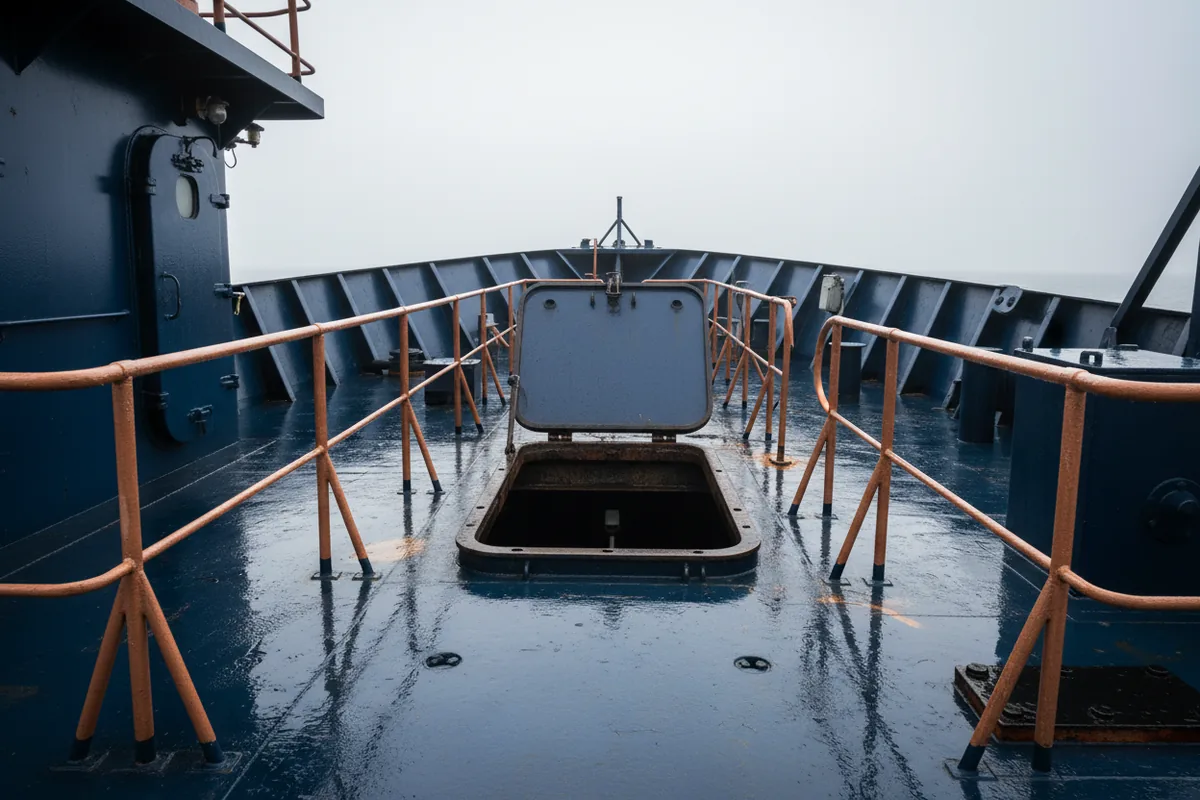
An appurtenance is the equipment and gear that belongs to the vessel and is used in running it. On deck fall facts, that can include the deck surface, ladders, gangways, hatches and the equipment around them. The question is whether that particular part of the vessel was reasonably fit for what it was used for at the time.
Mitchell also addressed short-lived conditions. The Court found no suggestion "that the duty is any less" for "an unseaworthy condition which may be only temporary." For a crew member who slipped on something that had been on the deck for a short while, this matters: a condition does not have to be long-standing to be part of the question.
The stakes here are concrete. For a seaman, unseaworthiness is a route that looks at the vessel itself rather than at anyone's carelessness, so the condition of the specific surface or piece of equipment, and its intended use at the moment of the fall, can shape whether this route is available at all.
There is one firm limit. For a longshore or harbor worker, 33 U.S.C. § 905(b) states that the vessel's liability "shall not be based upon the warranty of seaworthiness or a breach thereof at the time the injury occurred." Under that statute, that worker's action against the vessel rests on the vessel's negligence instead.