Skip to content
Sheet 63 / 64 · Jones Act

Jones Act Lawyer: What a Maritime Injury Claim Involves and How to Evaluate Yours

Jones Act

National · Updated November 10, 2026

Free Case Evaluation
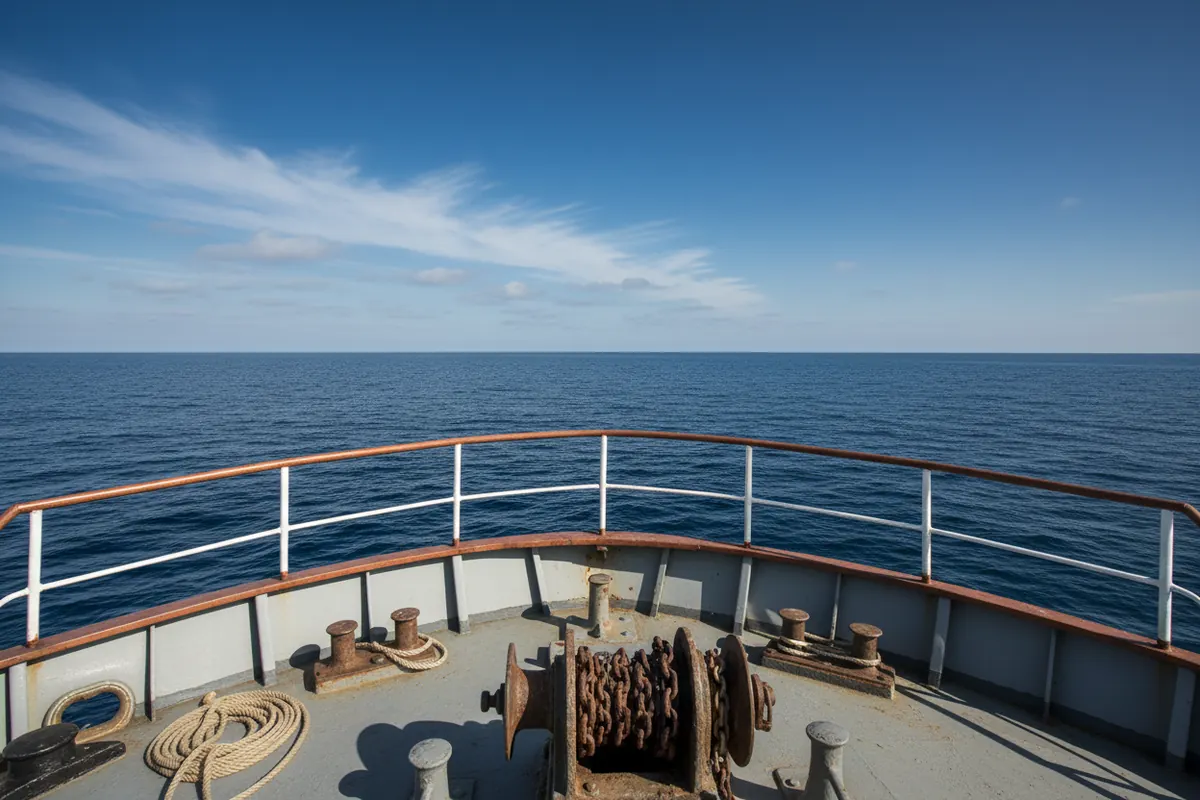
A vessel's bow rail and capstan overlooking the open ocean toward the horizon.
Immediate answer

Who may bring a Jones Act claim, how seaman status is decided, why partial fault does not end the claim, and how the three-year maritime filing window works.

On this page
  1. Key Takeaways
  2. Does the Jones Act Cover Your Injury? What the Law Says
  3. The Claims That Often Travel With a Jones Act Case
  4. How Did the Injury Happen? Common Circumstances a Lawyer Examines
  5. Who Answers for a Seaman's Injury Under Maritime Law?
  6. What Records Can Support a Jones Act Claim?
  7. Why the Three-Year Filing Window Matters for Your Claim
  8. Questions Worth Asking Before You Choose a Maritime Injury Lawyer
  9. Frequently asked questions
  10. Sources

If you were hurt working aboard a vessel, or you lost a family member who was, the Jones Act is the federal law that lets an injured seaman, or the personal representative of a seaman who died, bring a lawsuit against the employer and ask a jury to decide it. Whether it applies turns on the worker's job, the vessel and what caused the injury.

Most people facing a Jones Act question are not reading out of curiosity. They are a deckhand with a back injury who has not drawn a paycheck in weeks, a crew member wondering whether reporting an injury will cost them the next hitch, or a spouse trying to understand what happened offshore and who answers for it. This page walks through the federal maritime law behind these claims the way it would come up across a conference table: who the law covers, the claims that usually come with it, who may be responsible, the records that tend to matter and the time limit.

Key Takeaways

  • The Jones Act claim belongs to the seaman, or after a death to the seaman's personal representative, and it runs against the employer under 46 U.S.C. § 30104(a), which is why identifying who actually employed the worker matters as much as identifying who owned the vessel.
  • The negligence standard is borrowed from the law for railway workers, so the question is whether the employer's negligence played any part, "in whole or in part," in the injury, not whether it was the only cause.
  • A seaman's own mistake reduces the damages in proportion rather than ending the claim, and "you knew the job was dangerous" is not a defense where the employer's negligence contributed.
  • Seaman status comes first: everything else on this page depends on whether the worker's duties and connection to a vessel meet the Supreme Court's standard, and job titles do not decide it.
  • A Jones Act claim rarely travels alone; unseaworthiness and maintenance and cure often sit beside it, and each answers a different question about the same injury.
  • Federal law sets a three-year window for maritime injury and death actions, measured from when the cause of action arose, subject to exceptions provided by law.
  • Which law applies depends on the facts: where the injury happened, the vessel, the waters and the injured person's status.

Does the Jones Act Cover Your Injury? What the Law Says

The statute is short. Under 46 U.S.C. § 30104(a), "a seaman injured in the course of employment or, if the seaman dies from the injury, the personal representative of the seaman may elect to bring a civil action at law, with the right of trial by jury, against the employer." The same subsection says that the laws of the United States regulating recovery for injury to, or death of, a railway employee apply. In plain words, an injured seaman may sue the employer in a regular civil lawsuit and have a jury hear it, and the rules come from the federal railway-worker statutes.

Three of those railway rules do most of the work. Under 45 U.S.C. § 51, the employer is liable for injury or death "resulting in whole or in part from the negligence of any of the officers, agents, or employees" of the employer, or from a defect or insufficiency, due to its negligence, in its equipment, a list that expressly includes boats and wharves. Negligence here means a failure to use reasonable care. In a death case, that section directs the recovery for the benefit of the surviving spouse and children; if there are none, the employee's parents; and if none, the next of kin dependent on the employee.

Under 45 U.S.C. § 53, the worker's own contributory negligence, meaning the worker's share of the fault, "shall not bar a recovery," but the jury diminishes the damages in proportion to it; and the worker is not held contributorily negligent at all where the employer's violation of a statute enacted for the safety of employees contributed to the injury or death. Under 45 U.S.C. § 54, the worker is not held to have assumed the risks of the job where the injury resulted in whole or in part from the employer's negligence, or where a safety-statute violation contributed.

If you are worried that you slipped because you were rushing, or that the employer will say you signed on knowing the work was dangerous, these two sections speak directly to that worry. What weighs next is usually how the facts divide responsibility, not whether one mistake closes the door.

All of this rests on seaman status. In Chandris, Inc. v. Latsis, 515 U.S. 347 (1995), the Supreme Court held that the worker's duties must contribute to the function of the vessel or to the accomplishment of its mission, and that the worker must have a connection to a vessel in navigation, or an identifiable group of vessels, that is substantial in terms of both its duration and its nature. Whether a worker qualifies depends on what the worker did, on which vessels, and for how much of the job. Not every offshore worker is a seaman, and longshore and harbor workers and workers on fixed platforms generally fall outside the Jones Act and under other law.

The Claims That Often Travel With a Jones Act Case

Three claims commonly arise from the same injury aboard a vessel, and each asks something different. Jones Act negligence asks whether the employer, its officers or crew, or its equipment failed through a lack of reasonable care, under the railway rules above. Unseaworthiness asks whether the vessel itself was fit. Maintenance and cure asks what the employer owes an injured seaman while recovering, regardless of fault.

Even if no one aboard acted carelessly, you may still have a question about the vessel itself, because unseaworthiness comes from the general maritime law, the body of federal law the courts have built for maritime matters. In Mitchell v. Trawler Racer, Inc., 362 U.S. 539 (1960), the Supreme Court described the owner's duty as one to furnish a vessel and appurtenances reasonably fit for their intended use, while making clear that the standard is not an accident-free ship. A worn line, a deck that is not fit for the work done on it or gear unsuited to its task may raise the question; an injury alone does not answer it. Unseaworthiness is therefore about the condition of the vessel and its equipment, not about whether someone acted carelessly.

Maintenance and cure is the oldest of the three. In Vaughan v. Atkinson, 369 U.S. 527 (1962), the Court described maintenance and cure as providing a seaman with food and lodging when he becomes sick or injured in the ship's service, until he reaches maximum medical recovery, the point at which further treatment is not expected to improve the condition. For a seaman who cannot work, this is often the most immediate concern, because it addresses living and medical needs during recovery.

Federal law also protects the act of reporting. Under 46 U.S.C. § 2114(a), a person may not discharge or in any manner discriminate against a seaman because of protected acts the statute lists, including notifying, or attempting to notify, the vessel owner or the Secretary of a work-related personal injury or illness, cooperating with a safety investigation, and in good faith reporting a suspected violation of a maritime safety law.

Because these claims can be pursued together, a seaman or family is not choosing one theory and giving up the others at the start. What is worth weighing is how the same facts look under each: what the employer did, what condition the vessel was in, and what support has or has not been provided since the injury.

How Did the Injury Happen? Common Circumstances a Lawyer Examines

These cases usually begin with an ordinary workday that went wrong. The circumstances that come up in seamen's injury claims include deck conditions, such as wet, oily or cluttered surfaces and unsecured cargo or gear, which a vessel deck fall often involves; equipment that is deficient, worn or not suited to the task, such as winches, lines, cranes, ladders and hatches; supervision and training, such as a crew asked to do work it was not trained for or with too few hands; work procedures, such as an unsafe method ordered to save time or a task performed in weather that made it dangerous; and medical care after the injury: how quickly treatment was arranged and what happened in the hours and days that followed.

If your injury fits one of these patterns, it may already point toward a legal standard. If a supervisor's careless order, poor training or a crewmate's mistake played a part, that fits the "negligence of any of the officers, agents, or employees" language of 45 U.S.C. § 51. Defective or insufficient gear may fit both that section's equipment language and the vessel-fitness question under Mitchell. Similar injuries on barge work, on a tug or on a fishing vessel can lead to different claims depending on which of these facts are present.

For an injured seaman or a family, the stake is that how the injury happened shapes which claims apply and who may be responsible, so a detail that seems minor, such as who gave an instruction, can matter. A first conversation with an attorney often spends most of its time here, on the worker's regular duties, the vessel and waters, the sequence of events, the equipment and what the employer did before and after.

Who Answers for a Seaman's Injury Under Maritime Law?

Each claim points to its own kind of party. The Jones Act claim runs against the employer, because 46 U.S.C. § 30104(a) names the employer as the defendant. The unseaworthiness claim, as Mitchell describes the duty, runs against the vessel owner, the party obliged to furnish a vessel reasonably fit for its intended use. Maintenance and cure, as Vaughan describes it, is the employer's obligation to the seaman injured in the ship's service.

If you are not sure who you actually worked for, that is a common situation. Often the employer and the vessel owner are the same company, but sometimes your paychecks come from one company while the vessel belongs to another, or a third company runs the vessel day to day without owning it or signing the paychecks. When the roles are split, each party's responsibility follows from what the law asks of its role: reasonable care from the employer, a reasonably fit vessel from the owner, and from an operator, whatever duties its actual control of the vessel and crew carries.

The practical stake is that a claim brought against the wrong party, or against only one of several, may leave part of the picture unaddressed. Pay stubs, crew agreements and vessel documents often show who employed the worker and who owned or operated the vessel, and a conversation with an attorney can cover how those roles line up in a particular case.

What Records Can Support a Jones Act Claim?

Records carry these cases, because the people involved are often scattered across vessels and hitches by the time questions are asked. If you were hurt aboard a vessel, the records that usually matter include medical records and the full treatment history, starting with any first aid or care given on board; incident and accident reports, including the report made at the time and any later versions; vessel logs and maintenance records, which can show the condition of equipment and what repairs were requested or made; and photographs and video of the deck, gear and weather as they were.

The names of crew members and others who saw what happened, and how to reach them, matter as well. So do employment records and duty assignments, which bear on both the claim and on seaman status: which vessels the worker served on, for how long and doing what. Communications about the injury, such as texts, emails and messages with supervisors, the office or the vessel owner, round out the picture.

That last category connects to 46 U.S.C. § 2114(a). Because the statute bars discharging or discriminating against a seaman for notifying the vessel owner of a work-related injury, records of what happened after the report, such as changes in assignments, hours, pay or employment, may become relevant to a claim of their own.

What is at stake is that the records, more than memory, often decide how seaman status, fault and the dates are seen. Families after a death are often gathering these records without the person who knew them best, and injured seamen and families commonly find that pulling together what they already have gives the clearest picture of where the gaps are, which an attorney can then help sort through.

Why the Three-Year Filing Window Matters for Your Claim

The deadline is set by federal statute. Under 46 U.S.C. § 30106, "Except as otherwise provided by law, a civil action for damages for personal injury or death arising out of a maritime tort must be brought within 3 years after the cause of action arose." A statute of limitations is a law like this one that sets the time within which a lawsuit must be filed.

The clock runs from when the cause of action arose, the point at which the claim came into existence. For a single incident, such as a fall from a ladder or a crush injury at a winch, that question usually centers on the event itself. Where an injury or illness develops over time, when the claim arose can be harder to pin down, and the answer depends on the facts. The statute's opening words, "Except as otherwise provided by law," mean other law can change the general rule in some situations.

The stake is concrete: a claim brought after the window closes is generally barred, no matter how strong the facts would otherwise be. That is why the dates, including when the injury happened, when symptoms appeared and when treatment began, tend to come up early in any conversation about a maritime injury. This page cannot say how much time any particular reader has, or whether a window has closed; that turns on facts and law that apply case by case.

If the timeline of your injury is uncertain, or you are not sure which date matters, it can help to talk it through: you can request a case evaluation to discuss the dates and events with our attorney.

Questions Worth Asking Before You Choose a Maritime Injury Lawyer

Choosing legal help after an injury at sea is a decision made while hurting, often from a bunk, a hospital bed or a kitchen table far from the vessel. Because the outcome can depend on seaman status, the right defendants and the dates, the attorney's grasp of those rules can shape how a claim is framed from the start. A few questions tend to make a first conversation more useful.

One is whether the attorney regularly handles maritime injury and Jones Act matters, since the rules described here differ from those for injuries on land. Another is how the attorney explains seaman status: whether the explanation is tied to the worker's actual duties and vessels under the Chandris standard rather than to a job title. A third is whether Jones Act negligence, unseaworthiness and maintenance and cure are discussed together, since they answer different questions about the same injury. A fourth is how the attorney thinks about the timeline and the three-year window, including the dates that may control when the claim arose. A person may also ask how the attorney sees the roles of the employer, the vessel owner and any operator.

If your situation is not a seaman's, this page may not be the right map. It does not cover longshore and harbor worker claims, which arise under a different federal statute, or the routes available to workers on fixed platforms and to passengers; the rules for injuries at the dock and gangway can also differ. Recreational incidents are a separate subject as well. As this site states for recreational boating pages (boating, propeller, yacht, parasailing, jet ski, scuba), maritime jurisdiction is fact-specific, and many incidents are governed by state law; a guest hurt in a yacht accident or a diver injured in a scuba diving accident faces different questions than a paid crew member does.

Free case evaluation

No Fee Unless We Win Your Case

A free case evaluation is how it starts. Tell us what happened, and we’ll help you understand your options. You pay no fee unless we win your case.

Maritime Injury Law Center

How it works

  1. Call us or request a free case evaluationTell us what happened, in your own words.
  2. Talk through your caseYour options, and what your case may be worth.
  3. No fee unless we winYou pay no attorney fee unless we win your case.
Free case evaluation

Tell Us What Happened

Frequently asked questions

What is the Jones Act and who does it protect?

It is the federal law, at 46 U.S.C. § 30104(a), that lets an injured seaman, or the personal representative of a seaman who died, sue the employer with a jury. It protects workers who meet the seaman-status standard, which is decided by their duties and connection to a vessel, not by working on or near the water alone.

What does "seaman status" mean and why does it matter?

It is the gateway to the Jones Act. Under Chandris, the worker's duties must contribute to the vessel's function or mission, and the worker needs a connection to a vessel in navigation, or a group of vessels, substantial in both duration and nature. Two workers with the same title can come out differently because their actual work differed.

What is the difference between a Jones Act claim and an unseaworthiness claim?

A Jones Act claim targets the employer's conduct: whether negligence played any part in the injury. An unseaworthiness claim targets the vessel's condition: whether the owner furnished a vessel and gear reasonably fit for their use. A case can involve one, both or neither, and the parties answering each may differ.

What is maintenance and cure?

It is the employer's duty, described in Vaughan v. Atkinson, to provide food and lodging to a seaman sick or injured in the ship's service, until maximum medical recovery. It does not depend on anyone's fault, which is why it often matters in the weeks right after an injury, before questions of negligence are settled.

How long does a seaman have to file a Jones Act lawsuit?

Federal law, 46 U.S.C. § 30106, sets three years after the cause of action arose for maritime injury and death actions, except as otherwise provided by law. When a claim arose can itself be a question, especially for injuries that develop gradually, so the relevant date is not always obvious.

Can a seaman recover if they were partly at fault for the injury?

Partial fault does not bar the claim under 45 U.S.C. § 53; the jury reduces damages in proportion. And where the employer violated a safety statute that contributed to the injury, the worker is not held contributorily negligent at all. Whether and how these rules apply depends on the facts.

Can a seaman be fired for reporting a work-related injury?

Under 46 U.S.C. § 2114(a), a person may not discharge or discriminate against a seaman for notifying, or attempting to notify, the vessel owner or the Secretary of a work-related injury, among other protected acts. The protection covers attempts to report, not only completed reports.

What kinds of injuries does a Jones Act claim cover?

The statute speaks of a seaman "injured in the course of employment," and of death from that injury, without a list of injury types. The questions are whether the injury arose in the course of employment and whether the employer's negligence played a part. Any damages the law may allow depend on those facts.

Does the Jones Act apply to recreational boating accidents?

Generally not, because it applies to seamen injured in the course of employment, not to guests or recreational boaters. Maritime jurisdiction in recreational incidents is fact-specific, and many are governed by state law.

Sources

  1. 0146 U.S.C. § 30104, Personal injury to or death of seamen · GovInfo (U.S. Government Publishing Office)
  2. 0245 U.S.C. § 51, Liability of common carriers by railroad for injuries to employees from negligence · GovInfo (U.S. Government Publishing Office)
  3. 0345 U.S.C. § 53, Contributory negligence; diminution of damages · GovInfo (U.S. Government Publishing Office)
  4. 0445 U.S.C. § 54, Assumption of risks of employment · GovInfo (U.S. Government Publishing Office)
  5. 0546 U.S.C. § 30106, Time limit on bringing maritime action for personal injury or death · GovInfo (U.S. Government Publishing Office)
  6. 0646 U.S.C. § 2114, Protection of seamen against discrimination · GovInfo (U.S. Government Publishing Office)