
Skip to content
Sheet 13 / 64 · Worker claims

Longshore Worker Injury: What the Law Covers and What It Means for You

Worker claims

National · Updated November 10, 2026

Free Case Evaluation
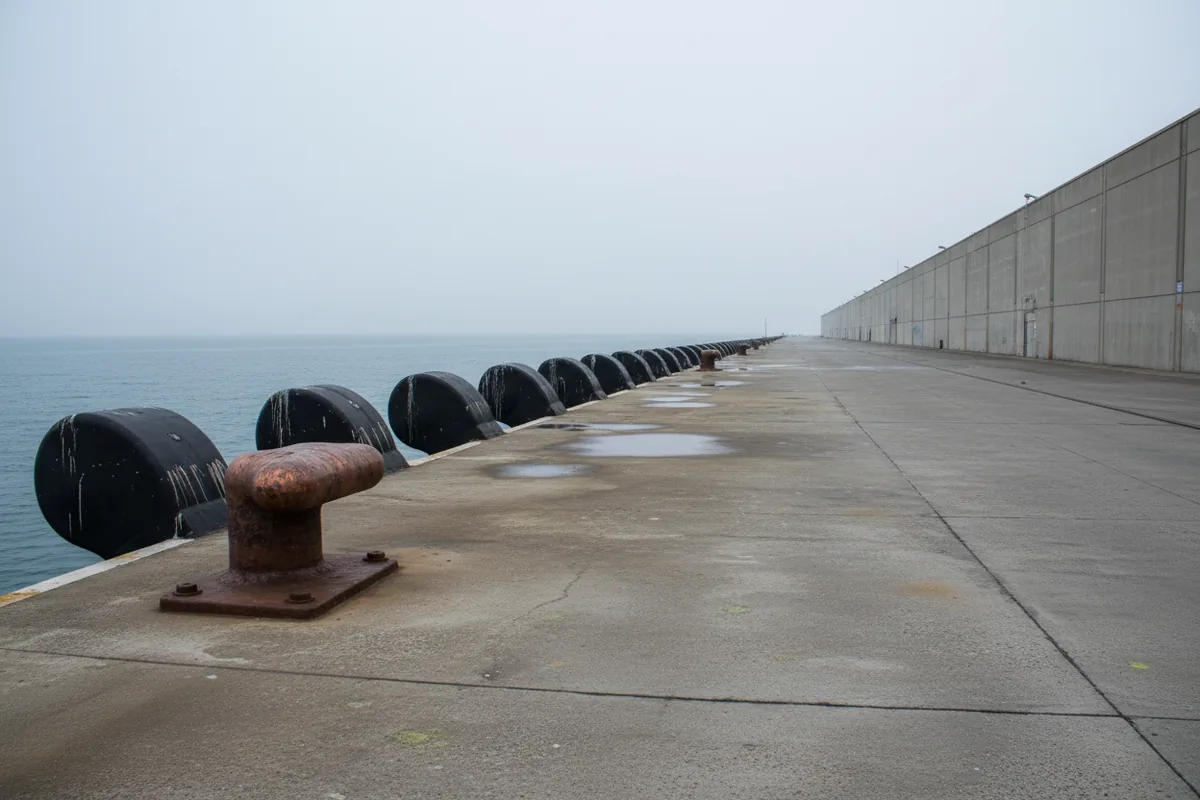
A wide concrete pier apron at a commercial port terminal, where longshore workers are injured.
Immediate answer

Who the Longshore Act covers, where an injury must happen, its no-fault benefits, the 30-day notice and one-year claim rules, and the separate vessel claim.

On this page
  1. Whether Your Job Falls Under the Longshore Act
  2. Whether the Place You Were Hurt Counts
  3. What Benefits You May Receive Without Proving Fault
  4. How Notice and Claim Timing Can Protect or Endanger Your Benefits
  5. When a Vessel's Negligence Opens a Separate Legal Path
  6. What to Weigh Before Filing — and Where the Rules Get Complicated
  7. Frequently asked questions
  8. Sources

If you were hurt loading a ship, repairing a vessel or working a terminal, a federal law called the Longshore and Harbor Workers' Compensation Act usually decides what happens next. It pays medical care and wage-loss benefits without anyone having to prove fault, as long as the worker is covered and the injury happened on navigable water or a nearby maritime work area.

Most people facing a longshore injury are dealing with more than pain. There are medical bills arriving, paychecks that have stopped, and a question nobody has answered plainly: is this a state workers' compensation case, a federal one, or something else? A family may be asking the same question after a death on a pier or in a dry dock. This page walks through who the federal Act covers, where an injury has to happen, the benefits, the notice and claim steps, and the separate claim that can exist against a vessel.

Whether Your Job Falls Under the Longshore Act

The Longshore and Harbor Workers' Compensation Act (often shortened to the LHWCA or the Longshore Act) is a federal workers' compensation law, not a state program. The Department of Labor's Longshore Act FAQ describes it as a law that provides compensation, medical care and vocational rehabilitation for workers disabled by on-the-job injuries on the navigable waters of the United States or in adjoining maritime work areas, plus survivor benefits when a work injury causes or contributes to a death.

Who counts is set by 33 U.S.C. § 902(3). An "employee" is any person engaged in maritime employment, including a longshoreman or other person in longshoring operations, and any harbor-worker, including a ship repairman, shipbuilder and ship-breaker. The statute then excludes eight groups: (A) people employed only for office clerical, secretarial, security or data processing work; (B) people employed by a club, camp, recreational operation, restaurant, museum or retail outlet; (C) marina employees not doing construction, replacement or expansion of the marina (except routine maintenance); (D) employees of suppliers, transporters or vendors temporarily on a maritime employer's premises and not doing that employer's normal covered work; (E) aquaculture workers; (F) people who build recreational vessels under sixty-five feet, or who repair or dismantle recreational vessels in connection with repair; (G) a master or member of a crew of any vessel; and (H) people engaged by a master to load, unload or repair a small vessel under eighteen tons net. Exclusions (A) through (F) apply only if the person is covered by a state workers' compensation law.

For a worker, this means the job title alone does not settle coverage; what the person actually did matters. If your duties fall inside the definition, the federal benefits described below may be available; if they fall into an exclusion, the claim may belong under state law or another statute instead. Crew members fall outside the Act and are generally addressed by the Jones Act, discussed on our Jones Act lawyer page, but not every offshore or waterfront worker is a seaman. Which law applies depends on the facts: where the injury happened, the vessel, the waters and the injured person's status. A conversation with an attorney can help sort out which side of that line the work fell on.

Whether the Place You Were Hurt Counts

Location is the second gate. Lawyers call it situs, meaning the place where the injury happened. Under 33 U.S.C. § 903(a), compensation is generally payable only if the disability or death results from an injury on the navigable waters of the United States, including any adjoining pier, wharf, dry dock, terminal, building way, marine railway, or other adjoining area customarily used by an employer in loading, unloading, repairing, dismantling or building a vessel.

In plain terms, the Act reaches beyond the water itself to the shoreside places where maritime work gets done. The Department of Labor's FAQ gives examples of adjoining areas, including piers, docks, terminals, wharves and areas used in loading and unloading vessels. It also notes that non-maritime employees may be covered if they work on navigable water and are injured there.

The "other adjoining area customarily used" language is where many questions arise. A fall at the gangway, covered on our page about dock accidents, sits close to the water. A storage yard or a repair building farther inland may or may not qualify, depending on how it is actually used and how it connects to vessel work.

If you were hurt somewhere near, but not on, the waterfront, this is often the point where the federal and state routes split. Records showing exactly where the injury happened, and what that area is used for, can carry real weight in answering it.

What Benefits You May Receive Without Proving Fault

A covered worker does not have to prove the employer did anything wrong. 33 U.S.C. § 904(b) states: "Compensation shall be payable irrespective of fault as a cause for the injury." That makes this a no-fault system: the question is whether the injury is covered, not who caused it. If an employer disputes the claim, the fight is usually over coverage, status or location, not blame.

Under 33 U.S.C. § 907(a), the employer must furnish medical, surgical and other treatment, nurse and hospital service, medicine, crutches and apparatus for as long as the nature of the injury or the process of recovery requires. The Department of Labor's claimant page lists the benefits as compensation for wage loss and/or permanent impairment, payment for reasonable and necessary medical treatment, and vocational rehabilitation if the worker cannot return to the usual job. The same page says that where a worker lost more than three days from work and sustained wage loss, the employer or its insurer pays compensation for the lost time. For a death, the FAQ describes survivor benefits for dependents.

For an injured worker, the checks and medical payments usually come from the employer itself, if self-insured, or from a private insurance company on its behalf, according to the Department of Labor's FAQ. The size of the wage-loss check is tied to the worker's average weekly wage, so pay records from before the injury matter; the claimant page notes it provides guidelines for calculating that figure.

The no-fault rule removes one hard question, but not the paperwork. Notice goes on Form LS-201 and a claim on Form LS-203, as the claimant page names them. A family after a death files Form LS-262, Claim for Death Benefits, according to the FAQ.

How Notice and Claim Timing Can Protect or Endanger Your Benefits

Two federal time rules shape every Longshore claim. The first is notice. Under 33 U.S.C. § 912, written notice of an injury or death must be given within thirty days after the injury or death, or within thirty days after the employee or beneficiary is aware, or with reasonable diligence or by reason of medical advice should have been aware, of a relationship between the injury or death and the employment; for an occupational disease that does not immediately cause disability or death, the period is one year from that awareness. Notice goes to the deputy commissioner in the compensation district where the injury happened and to the employer, in writing, with the employee's name and address and the time, place, nature and cause of the injury, signed by the employee or someone on their behalf. The claimant page names Form LS-201 for this notice.

Missing notice does not always end a claim. Section 912 says a failure to give notice does not bar a claim if the employer (or its designated official) or the carrier knew of the injury or death; if the deputy commissioner finds the employer or carrier was not prejudiced; or if the deputy commissioner excuses the failure because notice went to an official of the employer or its carrier without prejudice, or because notice could not be given for some satisfactory reason. Nor does it bar a claim unless the objection is raised at the first hearing. If you are past the notice window, these exceptions are what stand between a late notice and a lost claim.

The second rule is the claim itself. Under 33 U.S.C. § 913(a), the right to compensation is generally barred unless a claim is filed within one year after the injury or death; if compensation was paid without an award, a claim may be filed within one year after the last payment; and the time does not begin to run until the employee or beneficiary is aware, or with reasonable diligence should have been aware, of the relationship between the injury or death and the employment. The claim is filed with the deputy commissioner in the district where the injury happened, on Form LS-203. Missing this filing can bar compensation altogether.

These dates turn on facts like when symptoms connected to the job and whether payments were made. A conversation with our attorney can go through those dates and the papers already sent.

Apart from benefits from the employer, the Act leaves room for a claim against a vessel. Under 33 U.S.C. § 905(b), a covered person injured by the negligence of a vessel, or anyone otherwise entitled to recover damages because of it, may bring an action against the vessel as a third party. The vessel's liability "shall not be based upon the warranty of seaworthiness or a breach thereof," and this remedy is exclusive of all other remedies against the vessel except those under the Act.

That marks two different roads. The compensation claim is no-fault. The vessel claim is a negligence claim, so it asks whether the vessel failed in a duty it owed and whether that failure caused the injury.

Not every worker can take the second road. If you were employed by the vessel itself to provide stevedoring services, Section 905(b) bars the action when the injury was caused by the negligence of people providing those services. And if you did shipbuilding, repair or breaking work for an employer that was also the vessel's owner, operator or charterer, the action is barred against that employer and its employees.

The two roads can run side by side. Under 33 U.S.C. § 933, a person entitled to compensation need not choose between compensation and damages from a third party. But accepting compensation under a formal award operates as an assignment of those third-party rights to the employer unless the person sues within six months after acceptance, and a settlement with a third party for less than the compensation owed needs written approval from the employer and the employer's carrier "before the settlement is executed," made "on a form provided by the Secretary" and "filed in the office of the deputy commissioner within thirty days after the settlement is entered into." If that approval is not obtained and filed, or if the employee "fails to notify the employer of any settlement obtained from or judgment rendered against a third person," "all rights to compensation and medical benefits under this chapter shall be terminated."

Whether a vessel was negligent depends on what happened aboard or alongside it. Our pages on vessel deck falls and barge accidents cover settings where this question often comes up.

What to Weigh Before Filing — and Where the Rules Get Complicated

Each gate described above depends on facts: status under § 902(3), situs under § 903(a), and whether § 905(b) opens a vessel claim, and the three questions affect each other. A worker whose job fits the Act but who was hurt in an uncertain location faces one problem; a worker hurt aboard a vessel may face both a compensation question and a negligence question. What is at stake is whether benefits arrive at all, and whether a second claim exists alongside them.

The records that usually matter each answer one of those questions. Medical records and bills show the injury and treatment. An incident report and the names of coworkers who saw what happened show how it occurred. The Form LS-201 notice and Form LS-203 claim, with the dates they were sent, show whether the time rules were met. Pay records from before the injury bear on the wage-loss amount. Documentation of the exact work location speaks to situs, and the name and type of vessel involved speaks to a possible vessel claim. Families after a death often gather the death certificate and, as the FAQ describes, marriage and birth certificates and funeral expense records.

Federal safety rules can also bear on how the work should have been done, which may matter if you are weighing a vessel negligence claim. Which set applies depends on the setting: shipyard rules cover ship repairing, shipbuilding and shipbreaking under 29 C.F.R. § 1915.2; marine terminal rules, including cargo handling within a terminal, apply under 29 C.F.R. § 1917.1; and longshoring rules aboard vessels apply under 29 C.F.R. § 1918.1. These rules come from the Occupational Safety and Health Administration.

For an injured worker or family weighing the compensation claim and a possible vessel claim at once, a case evaluation with our attorney can walk through the records gathered and the timing of each step.

Free case evaluation

No Fee Unless We Win Your Case

A free case evaluation is how it starts. Tell us what happened, and we’ll help you understand your options. You pay no fee unless we win your case.

Maritime Injury Law Center

How it works

  1. Call us or request a free case evaluationTell us what happened, in your own words.
  2. Talk through your caseYour options, and what your case may be worth.
  3. No fee unless we winYou pay no attorney fee unless we win your case.
Free case evaluation

Tell Us What Happened

Frequently asked questions

Who counts as a longshore worker under federal law?

Under 33 U.S.C. § 902(3), it is a person in maritime employment, including longshoremen, harbor-workers, ship repairmen, shipbuilders and ship-breakers. The statute excludes groups such as office clerical workers, marina and recreational-business employees, aquaculture workers and vessel crew. Several exclusions apply only when the worker has state workers' compensation coverage, so the same job can land differently.

Does the LHWCA cover injuries that happen on a pier or in a shipyard?

It can. Section 903(a) reaches injuries on navigable waters and on any adjoining pier, wharf, dry dock, terminal, building way, marine railway or other adjoining area customarily used in loading, unloading, repairing, dismantling or building a vessel. A shipyard area used for vessel work may qualify; whether a particular spot does is a factual question.

Does a longshore worker have to prove the employer was at fault to receive benefits?

No. Section 904(b) makes compensation payable irrespective of fault. The worker's own carelessness does not, by itself, end the compensation claim. Fault becomes the central question only in a separate claim against a vessel under § 905(b).

How long does a longshore worker have to file a claim?

Section 913(a) generally requires a claim within one year after the injury or death, or within one year after the last payment if compensation was paid without an award, with the clock starting only once the worker knew or should have known the injury was work-related. Separate thirty-day written notice applies under § 912, with its listed exceptions.

What benefits does the LHWCA provide to an injured worker?

The Department of Labor lists compensation for wage loss and/or permanent impairment, reasonable and necessary medical treatment, and vocational rehabilitation when a worker cannot return to the usual job. Survivors may receive death benefits. The employer or its insurer typically pays, and the FAQ notes vocational rehabilitation services are part of the program.

Can a longshore worker sue the vessel as well as file a compensation claim?

Section 905(b) allows a separate action against a vessel for its negligence, though not based on the warranty of seaworthiness, and with limits for some stevedoring and shipyard workers. Section 933 says a worker need not choose between compensation and third-party damages. Whether a vessel claim exists depends on what happened.

What is the difference between the LHWCA and the Jones Act?

They cover different workers and do not overlap. The Longshore Act excludes a master or crew member of a vessel; those seamen fall under the Jones Act. The Department of Labor explains that seaman status turns on the worker's connection to a vessel in navigation, so being offshore or on the water does not by itself make someone a seaman.

What forms does a longshore worker use to report an injury and file a claim?

The Department of Labor's claimant page names Form LS-201, Notice of Employee's Injury or Death, and Form LS-203, Employee's Claim for Compensation. Survivors use Form LS-262, Claim for Death Benefits. The page also lists Form LS-1, which an employer provides to authorize treatment by a doctor of the worker's choice.

Sources

Statutes, regulations and court sources

  1. 0133 U.S.C. § 902 — Definitions · GovInfo (U.S. Government Publishing Office)
  2. 0233 U.S.C. § 903 — Coverage · GovInfo (U.S. Government Publishing Office)
  3. 0333 U.S.C. § 904 — Liability for compensation · GovInfo (U.S. Government Publishing Office)
  4. 0433 U.S.C. § 905 — Exclusiveness of liability · GovInfo (U.S. Government Publishing Office)
  5. 0533 U.S.C. § 907 — Medical services and supplies · GovInfo (U.S. Government Publishing Office)
  6. 0633 U.S.C. § 912 — Notice of injury or death · GovInfo (U.S. Government Publishing Office)
  7. 0733 U.S.C. § 913 — Filing of claims · GovInfo (U.S. Government Publishing Office)
  8. 0833 U.S.C. § 933 — Compensation for injuries where third persons are liable · GovInfo (U.S. Government Publishing Office)
  9. 0929 C.F.R. § 1915.2 — Scope and application (shipyard employment) · Electronic Code of Federal Regulations
  10. 1029 C.F.R. § 1917.1 — Scope and applicability (marine terminals) · Electronic Code of Federal Regulations
  11. 1129 C.F.R. § 1918.1 — Scope and application (longshoring) · Electronic Code of Federal Regulations

Other sources

  1. 12Longshore and Harbor Workers' Compensation Act Frequently Asked Questions (U.S. Department of Labor) · dol.gov
  2. 13Claimant/Injured Worker Page (U.S. Department of Labor, Longshore) · dol.gov