
Skip to content
Sheet 34 / 64 · Claim paths

Seafarers' Rights Under U.S. Maritime Law

Claim paths

National · Updated November 11, 2026

Free Case Evaluation
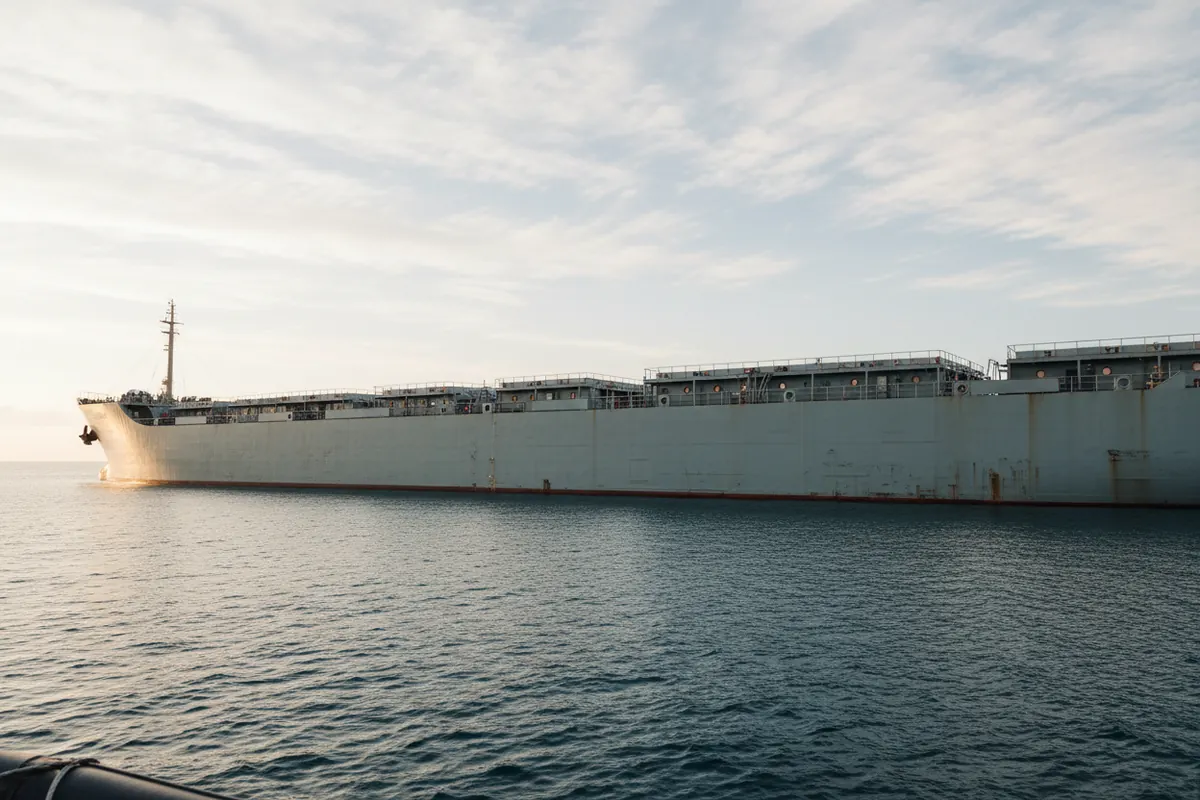
A vessel's accommodation block portholes above calm anchorage water, home to seafarers at sea.
Immediate answer

How federal law protects a seaman's wages, bars retaliation for reporting safety problems or injuries, and helps a stranded U.S. seaman get home.

On this page
  1. What 'Seafarers' Rights' Means Under U.S. Law
  2. When Seamen's Wages Are Owed and What Federal Law Requires
  3. Protection If You Report a Safety Problem or a Work Injury
  4. Medical Care, Maintenance, and Cure: The Short Version
  5. Getting Home: What the Law Provides When a Seafarer Is Stranded
  6. Rights on Foreign-Flag Vessels: What Changes and What Does Not
  7. What These Rules Depend On — and Where the Facts Matter
  8. Frequently asked questions
  9. Sources

For a person working aboard a vessel, U.S. maritime law provides enforceable rights that do not depend on an employer's goodwill. Federal statutes protect a seaman's wages, bar firing or punishing a seaman who reports a safety problem or a work injury, and provide passage to a U.S. port for a destitute U.S. seaman abroad. A separate doctrine covers medical care, and which rules apply depends on the facts.

Most people facing this question are not reading out of curiosity. They are a deckhand whose last paycheck never came, a crew member who was pushed off a vessel after reporting an injury, a seafarer stuck in a port far from home, or a family trying to understand what a loved one was owed. This page walks through what federal law says on each of those points, what it means for someone in that position, and where the answer turns on facts that only the details of a particular voyage can settle.

What 'Seafarers' Rights' Means Under U.S. Law

A seaman is the word federal statutes use for a person who works as part of a vessel's crew; "seafarer" is the everyday word for the same working life at sea. "Seafarers' rights" is a plain-language name for the minimum protections federal maritime law sets for crew: wages, medical care, help getting home, and protection from being punished for speaking up about safety or an injury.

These are legal rights written into the United States Code, not company policies a vessel owner can change at will. A seafarer who was told "that's just how we do things" may be hearing a description of a practice, not of the law.

Two related areas have their own pages on this site. Jones Act negligence is a seaman's claim against an employer for an injury in the course of employment, which 46 U.S.C. § 30104 allows a seaman to bring as a civil action with the right of trial by jury; our Jones Act lawyer guide covers it. Maintenance and cure, the shipowner's duty to provide an injured seaman with medical care and a daily living allowance, also has its own page and is summarized briefly below.

Which of these rules applies to any one person depends on the facts: where the injury or dispute happened, the vessel, the waters, and the person's status as a worker. Not every person who works offshore or on the water is a seaman. A dockworker, for example, may fall under a different federal system, explained in our longshore worker injury page.

When Seamen's Wages Are Owed and What Federal Law Requires

The federal wage statute for seamen is 46 U.S.C. § 10313, titled simply "Wages." It governs when and how a seaman's pay is due, and it carries its own enforcement rule.

Its subsection (i) reads, in full: "This section applies to a seaman on a foreign vessel when in a harbor of the United States. The courts are available to the seaman for the enforcement of this section."

For a seafarer whose pay is late or short, the first point is that wage disputes at sea are governed by a specific federal statute, not only by whatever the employer's paperwork says. The second is that the statute expressly opens U.S. courts to a seaman enforcing it, including a seaman on a foreign vessel while it is in a U.S. harbor.

The section's other subsections set out when pay becomes due and the consequences of delay, and they leave certain kinds of vessels outside some of their terms. How those parts apply turns on the type of vessel, the voyage and the reason the pay was held back. Whether the employer had a real reason for the delay is a factual question, and it is often where a wage dispute is decided.

Records that tend to show the wages owed include the crew agreement or articles, pay slips, the dates the voyage began and ended, and messages about the missing pay. Where the vessel was when the pay fell due, and in particular whether it was in a U.S. harbor, can matter a great deal.

Protection If You Report a Safety Problem or a Work Injury

Retaliation is not just a workplace disagreement when it follows a protected report. Under 46 U.S.C. § 2114(a), a person may not discharge or in any manner discriminate against a seaman because the seaman did any of the following:

  • in good faith reported, or was about to report, to the Coast Guard or another appropriate federal agency a belief that a maritime safety law or regulation was violated;
  • in good faith reported, or was about to report, to the vessel owner, the Coast Guard or another appropriate federal agency sexual harassment or sexual assault against the seaman, or knowledge of it against another seaman;
  • refused to perform duties ordered by the employer because of a reasonable apprehension or expectation that performing them would result in serious injury to the seaman, other seamen or the public;
  • testified in a proceeding brought to enforce a maritime safety law or regulation;
  • notified, or attempted to notify, the vessel owner or the Secretary of a work-related personal injury or work-related illness of a seaman;
  • cooperated with a safety investigation by the Secretary or the National Transportation Safety Board;
  • furnished information to the Secretary, the National Transportation Safety Board or another public official about a marine casualty resulting in injury, death or property damage in connection with vessel transportation;
  • accurately reported hours of duty.

The refusal-to-work protection has two conditions in the same statute. The danger must be one a reasonable person in similar circumstances would see as a real danger of injury or serious impairment of health, and the seaman must have sought correction of the unsafe condition from the employer and been unable to get it.

Subsection (b) sets the complaint route. A seaman alleging discharge or discrimination, or another person at the seaman's request, may file a complaint in the same manner as a complaint under subsection (b) of section 31105 of title 49. That complaint is subject to the procedures, requirements and rights in that section, including the right to file an objection, the right to petition for review, and the requirement to bring a civil action under its subsection (d).

For a crew member who was fired, demoted or taken off the schedule after reporting an injury, the timing and the reason for that decision are themselves legal questions. What often matters is a record of the protected act (the report, the message, the refusal and the request for correction) and of what happened afterward, and when.

Medical Care, Maintenance, and Cure: The Short Version

Maintenance and cure is the shipowner's duty to provide an injured or ill seaman with medical care ("cure") and a daily living allowance ("maintenance"), a duty that does not depend on proving anyone was at fault. In Vaughan v. Atkinson, 369 U.S. 527 (1962), the U.S. Supreme Court held that a shipowner's failure to pay maintenance and cure can entitle the seaman to attorney's fees.

For a seafarer recovering from an injury, medical care is its own entitlement, separate from any argument about who caused the accident. The full doctrine, including when it begins and ends, is covered on this site's maintenance and cure page.

Getting Home: What the Law Provides When a Seafarer Is Stranded

Being stranded in a foreign port without pay or passage is one of the most frightening situations a seafarer can face, and federal law speaks to it directly for U.S. seamen. Under 46 U.S.C. § 11104(a), "A consular officer shall provide, for a destitute seaman of the United States, subsistence and passage to a port of the United States in the most reasonable manner, at the expense of the United States Government and subject to regulations prescribed by the Secretary of State." The same subsection adds that a seaman, if able, is required to perform duties on the vessel giving passage, in line with the seaman's rating.

That means a destitute U.S. seaman abroad has a specific federal channel, the consular officer, for food, lodging and a way home, within the rules the Secretary of State sets.

A separate section, 46 U.S.C. § 11113, deals with the treatment of abandoned seafarers and the Abandoned Seafarers Fund. Its subsection (b) states that nothing in the section shall be construed to create a private right of action or any other right, benefit or entitlement to necessary support for any person, or to compel the Secretary to pay or reimburse the cost of necessary support.

A private right of action is the right of an individual to file a lawsuit personally. Here, it means the section does not hand a stranded seafarer a lawsuit to force support from that program. The practical difference is between the consular channel, which the statute directs, and the abandoned-seafarer provisions, which come with that stated limit.

Rights on Foreign-Flag Vessels: What Changes and What Does Not

A foreign-flag vessel is one registered in another country. A foreign-flag seafarer's rights can depend on the ship's flag and on the crew contract, and those sources can add terms of their own.

U.S. law still reaches some of these situations. As noted above, 46 U.S.C. § 10313(i) applies the federal wage section to a seaman on a foreign vessel when in a harbor of the United States, and makes U.S. courts available to enforce it. For a crew member whose wages went unpaid, that means a foreign flag does not by itself close U.S. courts while the ship is docked in a U.S. port.

Crew pay and conditions are often set by a CBA, a collective bargaining agreement: a written contract between a seafarers' union and a shipowner or operator covering wages, hours and working conditions. Some crew instead work under an individual contract. What either one provides depends on its own terms.

For a seafarer in a pay dispute on a foreign-flag vessel, the questions that usually shape the answer are where the ship was when the dispute arose, what the crew contract or CBA says, and how that contract fits alongside U.S. law.

What These Rules Depend On — and Where the Facts Matter

Each section above has turned on a few recurring facts: the type of vessel, the waters where it was operating, the person's status as a seaman or another kind of maritime worker, and the vessel's flag. Those facts decide which statute applies and how it applies. A tug crew member, a commercial fisherman and a harbor worker can face very different rules after similar events; this site's pages on tugboat accidents and commercial fishing injuries show how those settings differ.

For a seafarer, these facts can decide whether unpaid wages can be pursued in a U.S. court, whether a firing after an injury report falls under federal protection, and whether a consular officer must arrange passage home. Assuming that one rule fits can mean missing a protection, or a limit, that turns on a fact not yet looked at.

These rules concern crew. They do not address cruise passengers. Recreational boating incidents are also a separate area: maritime jurisdiction there is fact-specific, and many incidents are governed by state law.

For a seafarer or family trying to work out which of these rules fits the voyage, the vessel and the job, a case evaluation is available to talk through the timeline, the contracts and the reports involved.

Free case evaluation

No Fee Unless We Win Your Case

A free case evaluation is how it starts. Tell us what happened, and we’ll help you understand your options. You pay no fee unless we win your case.

Maritime Injury Law Center

How it works

  1. Call us or request a free case evaluationTell us what happened, in your own words.
  2. Talk through your caseYour options, and what your case may be worth.
  3. No fee unless we winYou pay no attorney fee unless we win your case.
Free case evaluation

Tell Us What Happened

Frequently asked questions

What are maritime rights for seafarers?

They are protections written into federal statutes for crew: wage rules, protection from retaliation, help getting home for a destitute U.S. seaman abroad, and medical care through maintenance and cure. Because they come from the U.S. Code rather than an employer handbook, a vessel owner cannot simply set them aside. Which ones apply depends on the vessel, the waters and the person's status.

What are the basic requirements a seafarer must meet to enforce these rights?

Generally, the person has to qualify as a seaman under the statute involved, since these sections speak of a "seaman." Whether someone qualifies is a fact-specific question about their duties and the vessel, not a matter of job title. Some maritime workers fall under different federal rules instead.

Can a seafarer on a foreign-flag ship use U.S. courts to recover unpaid wages?

Under 46 U.S.C. § 10313(i), the federal wage section applies to a seaman on a foreign vessel when in a harbor of the United States, and the courts are available to the seaman to enforce it. The crew contract may add its own terms. Whether a particular wage claim succeeds depends on the facts.

Is a seafarer protected if they report a safety problem to the Coast Guard?

Yes. A good-faith report, or an intended report, of a maritime safety violation to the Coast Guard is one of the protected acts in 46 U.S.C. § 2114(a). A seaman alleging retaliation may use the complaint route in subsection (b), which carries its own procedures, including a requirement about bringing a civil action.

What does the Abandoned Seafarers Fund provide, and can a seafarer sue the fund?

A seafarer cannot use 46 U.S.C. § 11113 to sue for support: subsection (b) says the section creates no private right of action or entitlement to necessary support. For a destitute U.S. seaman abroad, 46 U.S.C. § 11104(a) separately directs a consular officer to provide subsistence and passage to a U.S. port.

What is a CBA agreement for seafarers?

A CBA is a collective bargaining agreement, a contract between a seafarers' union and a shipowner or operator setting wages, hours and working conditions for crew. It may add terms beyond the federal statutes. What any one CBA provides depends on its own wording, and it sits alongside federal law rather than replacing it.

Sources

  1. 0146 U.S.C. § 10313 — Wages · GovInfo (U.S. Government Publishing Office)
  2. 0246 U.S.C. § 2114 — Protection of seamen against discrimination · GovInfo (U.S. Government Publishing Office)
  3. 0346 U.S.C. § 11104 — Destitute seamen · GovInfo (U.S. Government Publishing Office)
  4. 0446 U.S.C. § 11113 — Treatment of abandoned seafarers · GovInfo (U.S. Government Publishing Office)
  5. 0546 U.S.C. § 30104 — Personal injury to or death of seamen · GovInfo (U.S. Government Publishing Office)