Skip to content
Sheet 36 / 64 · Injury settings

Port Worker Injury: Federal Law, Safety Rules, and What Comes Next

Injury settings

National · Updated November 11, 2026

Free Case Evaluation
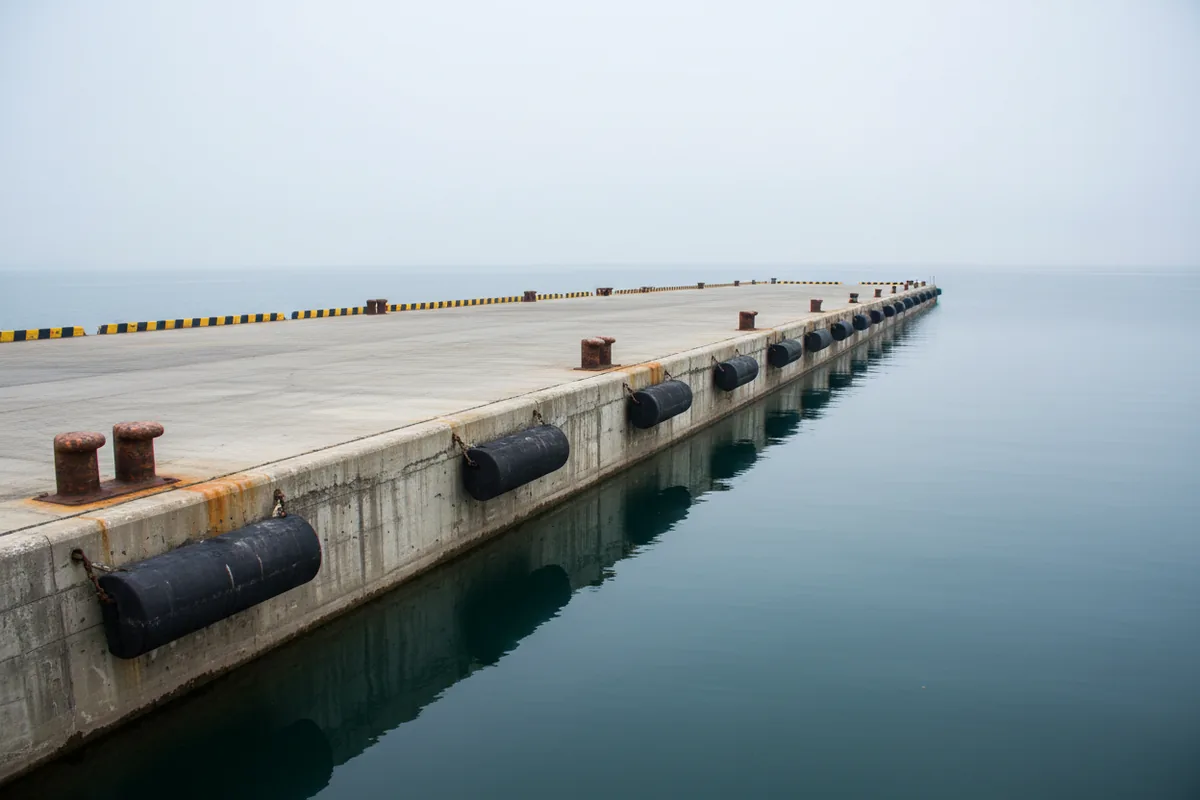
A concrete port wharf edge with steel bollards and rubber fenders along the waterline.
Immediate answer

A port worker injury on a pier, wharf or terminal often falls under the federal Longshore Act. Learn who it covers, OSHA terminal rules and when a vessel claim exists.

On this page
  1. What the Longshore and Harbor Workers' Compensation Act Covers
  2. If Your Job Mixed Office Work, Vendor Work or Crew Duty, Your Status May Decide Coverage
  3. If the Crane Was Shore-Based, a Different Safety Standard Applies — and That Can Matter
  4. When a Port Worker May Have a Claim Against a Vessel
  5. What Shapes a Port Injury Case — and What a Worker or Family May Weigh
  6. Key Takeaways for Injured Port Workers and Their Families
  7. Frequently asked questions
  8. Sources

If you were hurt working at a port, a federal law, the Longshore and Harbor Workers' Compensation Act, often decides your benefits. It covers many injuries on piers, wharves and terminals used to load or unload ships. Separate federal safety rules govern terminal work, and a claim against a vessel may exist if the ship's own negligence played a part.

Most people facing a port injury are carrying more than the injury itself. There is the shift that ended in an ambulance, the paychecks that stopped, and a stack of forms from an employer or insurer that speak a language nobody explained. If you are a terminal worker, or the husband, wife, parent or child of one, the first question is usually simple and hard at once: which law applies here, and is there anything beyond the benefits the employer's insurer is describing?

This page walks through the federal compensation law for port injuries, the safety rules for marine terminals and longshoring, and the separate claim the law allows against a vessel.

What the Longshore and Harbor Workers' Compensation Act Covers

The coverage rule sits in 33 U.S.C. § 903(a). Compensation is payable for disability or death "only if the disability or death results from an injury occurring upon the navigable waters of the United States (including any adjoining pier, wharf, dry dock, terminal, building way, marine railway, or other adjoining area customarily used by an employer in loading, unloading, repairing, dismantling, or building a vessel)." The statute opens with "Except as otherwise provided in this section," so other parts of section 903 can narrow that general rule.

Navigable waters are, in plain terms, the waters ships use for commerce. The adjoining area language is what reaches the land side of a port. A pier, wharf or terminal counts when it sits next to those waters and employers customarily use it to load, unload, repair, dismantle or build vessels. The test looks at the place and how it is used, not only at a fence line or a property map.

For a port worker, this means the spot where you were hurt matters a great deal. A fall on a container yard used for loading ships stands on different legal ground than the same fall in an office building across the street. What you may want to weigh is how the area where you were hurt is actually used day to day.

Which law applies always depends on the facts: where the injury happened, the vessel involved, the waters and the injured person's status. The worker's own benefits under this law are covered on the site's page on longshore worker injury, and injuries at the edge where a vessel meets the dock, such as gangways and mooring lines, are covered on the site's dock accidents page.

If Your Job Mixed Office Work, Vendor Work or Crew Duty, Your Status May Decide Coverage

Location alone does not settle coverage. The injured person also has to be an "employee" as 33 U.S.C. § 902(3) defines it: "any person engaged in maritime employment, including any longshoreman or other person engaged in longshoring operations, and any harbor-worker including a ship repairman, shipbuilder, and ship-breaker."

If you work at a port but not on the cargo itself, the same section lists groups that may fall outside that definition:

  • people employed exclusively for office clerical, secretarial, security or data processing work;
  • people employed by a club, camp, recreational operation, restaurant, museum or retail outlet;
  • marina employees not engaged in construction, replacement or expansion of the marina (except for routine maintenance);
  • employees of suppliers, transporters or vendors who are temporarily doing business on a covered employer's premises and are not doing work that employer's covered employees normally perform;
  • aquaculture workers;
  • people employed to build recreational vessels under sixty-five feet, or to repair a recreational vessel or dismantle part of one in connection with its repair;
  • a master or member of a crew of any vessel; and
  • anyone engaged by a master to load, unload or repair a small vessel under eighteen tons net.

One condition changes how the first six of these exclusions work. The statute applies them only "if individuals described in clauses (A) through (F) are subject to coverage under a State workers' compensation law." The crew exclusion and the small-vessel exclusion carry no such condition. For a clerk or a vendor's driver, then, the answer can turn on whether state coverage exists, not only on the job title.

The Department of Labor's Longshore Act FAQ describes the covered group as employees in traditional maritime occupations "such as longshore workers, ship-repairers, shipbuilders or ship-breakers, and harbor construction workers," with injuries on navigable waters or adjoining areas "including piers, docks, terminals, wharves, and those areas used in loading and unloading vessels." The same FAQ explains that crew members are covered by the Jones Act instead; the line between crew and shore workers is discussed on the site's page about Jones Act seaman status.

Status is a threshold question, meaning it comes before everything else. A worker who is excluded may be routed to a different legal framework entirely. If your job mixed office work with time on the pier, what you did, and how much of it, is worth thinking through, and an attorney can help sort out which side of the line those duties fall on. Warehouse loading docks away from the water fall outside this page.

If the Crane Was Shore-Based, a Different Safety Standard Applies — and That Can Matter

OSHA's maritime industry overview describes the industry as including "the construction, repair, and scrapping of vessels, as well as the movement of cargo and other materials," and lists hazards including "slips, trips, and falls, machinery and equipment hazards, hazardous chemicals, confined/enclosed spaces, and fire hazards." That page is at OSHA's maritime industry overview.

If you were hurt on shore, handling cargo in the yard, moving it to or from a truck or train, or using and maintaining terminal equipment, the governing standards are usually OSHA's marine terminal rules. 29 C.F.R. § 1917.1(a) applies them to "employment within a marine terminal," including "the loading, unloading, movement or other handling of cargo, ship's stores or gear within the terminal or into or out of any land carrier, holding or consolidation area," and other activity tied to the terminal's operation, "such as the use and routine maintenance of facilities and equipment." All cargo transfer done with shore-based material handling devices is regulated by that part. The rule also carves out some facilities, including those used solely for bulk storage and transfer of liquids and gases.

If you were hurt aboard ship, a different part applies. 29 C.F.R. § 1918.1(a) covers "longshoring operations and related employments aboard vessels," while again sending shore-based cargo transfer back to the terminal rules.

The practical point is that a crane lift, a forklift on the apron and work in a ship's hold may each sit under a different set of safety standards. For an injured worker, knowing which one governed the task helps frame what conduct was expected and who was responsible for it.

A broken safety rule, on its own, does not prove anyone was at fault. The rule describes how the work was supposed to be done. Whether it was broken, and whether that connects to your injury, are questions your own facts answer, and they are part of what an attorney can help sort out.

When a Port Worker May Have a Claim Against a Vessel

Families often ask whether the employer's benefits are the end of the road. Under 33 U.S.C. § 905(b), when a covered person is injured "caused by the negligence of a vessel," that person, or anyone otherwise entitled to recover damages because of the injury, "may bring an action against such vessel as a third party." The employer cannot be made liable to the vessel for those damages, and agreements saying otherwise are void.

The same subsection sets limits. If the person was employed by the vessel to provide stevedoring services, no such action "shall be permitted if the injury was caused by the negligence of persons engaged in providing stevedoring services to the vessel." If the person did shipbuilding, repair or breaking work for an employer who was also the vessel's owner, operator, charterer or agent, no action is allowed against that employer or its employees. The vessel's liability "shall not be based upon the warranty of seaworthiness," and this remedy is exclusive of all other remedies against the vessel except those under the Act.

This is a separate path from the employer's compensation duty. Under 33 U.S.C. § 933(a), a person entitled to compensation who believes a third party is liable "need not elect" between the two. The compensation side is no-fault: 33 U.S.C. § 904(b) makes it payable "irrespective of fault." A vessel claim, by contrast, turns on negligence, meaning a failure to use reasonable care.

Whether a § 905(b) claim fits depends on the vessel's role in what happened and who employed the worker. If a ship's gear, crew or conditions were part of your injury, that is the decision point. A conversation with our attorney can go through how the vessel figured in the event; you can request a case evaluation when you are ready.

What Shapes a Port Injury Case — and What a Worker or Family May Weigh

A handful of facts tend to carry the most weight.

Location comes first. Under § 903(a), whether the injury happened on a terminal, pier, wharf, vessel or another adjoining area can decide whether the Longshore Act applies at all. Status comes next: whether the worker fits the § 902(3) definition or one of its exclusions. Then there is the work itself at the moment of injury, and what caused the harm, which matters most where a vessel's conduct may be involved. Related settings, such as a barge accident or a tugboat accident, raise their own versions of these questions.

If you were hurt, the records that usually matter include medical records and bills, the employer's incident report, photos and video of the scene or equipment, and the names of coworkers who saw what happened. Families after a death often keep the worker's pay records, schedules and correspondence from the employer or insurer. On the medical side, 33 U.S.C. § 907(a) requires the employer to furnish medical, surgical and hospital treatment, medicine and apparatus "for such period as the nature of the injury or the process of recovery may require." For a worker still in treatment, that duty is tied to the injury and recovery, not to a fixed calendar.

The Longshore system also has its own notice and claim-filing steps, with timing rules this page does not detail. How those steps apply to a particular injury is one of the first things a conversation with an attorney can cover.

Damages in a vessel negligence case are a different subject from compensation benefits, and nothing on this page predicts what any case involves. What a worker or family may weigh is which of these facts are clear and which are still uncertain.

Key Takeaways for Injured Port Workers and Their Families

A port injury rarely sits inside one rule. Three federal frameworks overlap at the water's edge, and each raises its own question for a worker or family:

  • Compensation: the Longshore Act, through § 903(a), reaches injuries on navigable waters and adjoining areas used for vessel work, and it pays without regard to fault. The question to weigh is where the injury happened and how that place is used.
  • Safety: OSHA's terminal rules in § 1917.1(a) and its longshoring rules in § 1918.1(a) describe how the work is supposed to be done, on shore and aboard ship. The question is which standard governed the task and the equipment involved.
  • Vessel liability: § 905(b) allows a negligence action against a vessel, within the limits it sets. The question is whether the ship's gear, crew or conditions played a part, and who employed the worker.

A single moment, such as cargo swinging from a ship's gear onto a terminal, can touch all three. Sorting each fact into its framework often makes the paperwork feel less like a wall, and it is the kind of sorting an attorney can help with. Workers whose jobs take them farther out, such as to platforms, face related questions covered on the site's page on offshore worker injury.

Free case evaluation

No Fee Unless We Win Your Case

A free case evaluation is how it starts. Tell us what happened, and we’ll help you understand your options. You pay no fee unless we win your case.

Maritime Injury Law Center

How it works

  1. Call us or request a free case evaluationTell us what happened, in your own words.
  2. Talk through your caseYour options, and what your case may be worth.
  3. No fee unless we winYou pay no attorney fee unless we win your case.
Free case evaluation

Tell Us What Happened

Frequently asked questions

Does the Longshore and Harbor Workers' Compensation Act cover injuries at a port terminal?

It can. Section 903(a) lists terminals among the adjoining areas the Act reaches, but only areas customarily used to load, unload, repair, dismantle or build vessels. A terminal's use, not just its name, is what places an injury inside the coverage.

What kinds of port workers are covered under the Longshore Act?

People in maritime employment, including longshore workers and harbor workers such as ship repairers. Some groups, like workers doing only office clerical tasks, are excluded only where a state workers' compensation law covers them. Crew members are excluded outright and fall under the Jones Act instead.

Can a port worker sue a vessel owner separately from a workers' compensation claim?

Section 905(b) allows an action against a vessel for its own negligence, and § 933(a) says the worker need not choose between that and compensation. The claim cannot rest on seaworthiness, and stevedoring and shipbuilding exceptions can bar it, depending on who employed the worker.

What OSHA rules apply to marine terminal work?

Part 1917 governs work within a marine terminal, including cargo handling and routine equipment maintenance, and all cargo transfer with shore-based devices. Part 1918 governs longshoring aboard vessels. The dividing line is often the equipment used, not only where the worker stood.

Does a port injury always fall under federal maritime law?

No. Which law applies depends on where the injury happened, the vessel, the waters and the worker's status. An injury away from navigable waters and adjoining vessel-work areas, or to someone outside the federal definition of employee, can fall outside the Longshore Act.

What records typically matter after a port worker injury?

Medical records, employer incident reports, photos or video and witness names come up most often. For a vessel claim, records showing the ship's equipment, crew activity or conditions at the time can matter as much as the worker's own medical file.

Is a safety violation proof that someone was at fault for a port injury?

No. An OSHA standard describes expected conduct, but fault requires showing what happened and whether the violation actually connected to the harm. In the Longshore compensation system, fault is not the question at all, since benefits are payable irrespective of fault.

Sources

Statutes, regulations and court sources

  1. 0133 U.S.C. § 902 — Definitions · GovInfo (U.S. Government Publishing Office)
  2. 0233 U.S.C. § 903 — Coverage · GovInfo (U.S. Government Publishing Office)
  3. 0333 U.S.C. § 904 — Liability for compensation · GovInfo (U.S. Government Publishing Office)
  4. 0433 U.S.C. § 905 — Exclusiveness of liability · GovInfo (U.S. Government Publishing Office)
  5. 0533 U.S.C. § 907 — Medical services and supplies · GovInfo (U.S. Government Publishing Office)
  6. 0633 U.S.C. § 933 — Compensation for injuries where third persons are liable · GovInfo (U.S. Government Publishing Office)
  7. 0729 C.F.R. § 1917.1 — Marine terminals: scope and applicability · Electronic Code of Federal Regulations
  8. 0829 C.F.R. § 1918.1 — Longshoring: scope and application · Electronic Code of Federal Regulations

Other sources

  1. 09Maritime Industry — Overview (OSHA) · Occupational Safety and Health Administration
  2. 10Longshore and Harbor Workers' Compensation Act Frequently Asked Questions (U.S. Department of Labor) · dol.gov