Skip to content
Sheet 48 / 64 · Boating accidents

Yacht Accident Lawyer: What Injured Guests and Crew Need to Know

Boating accidents

National · Updated November 10, 2026

Free Case Evaluation
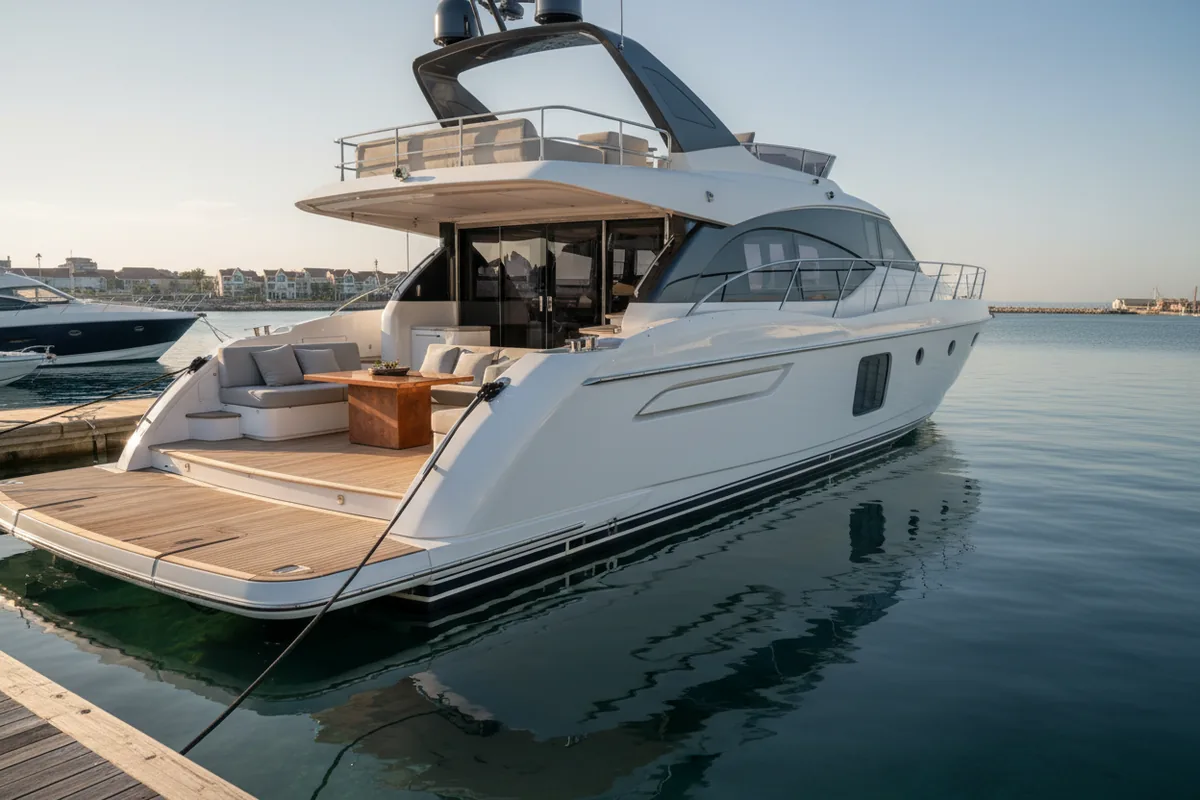
A large private motor yacht moored at a calm marina on a sunny afternoon.
Immediate answer

Hurt on a yacht as a guest or paid crew? How the Jones Act, admiralty jurisdiction, an owner's 6-month limitation action and casualty reporting rules apply.

On this page
  1. Key Takeaways
  2. Guest or Paid Crew: Which Set of Rights May Apply to You
  3. What Has to Be Shown After a Fall, Fire or Collision Aboard
  4. When More Than One Party May Owe You a Duty
  5. How an Owner's Limitation Action Can Shape Your Claim
  6. What the Casualty Report Records About Your Accident
  7. Whether a Federal Court and Maritime Law May Hear Your Case
  8. What Losses the Law May Recognize After a Yacht Injury
  9. Questions Worth Asking Before You Speak With an Attorney
  10. Frequently asked questions
  11. Sources

If you were hurt on a chartered or private yacht, your position aboard shapes the law that applies. A paid crew member who qualifies as a seaman may bring a Jones Act action against the employer. A guest's claim rests on general maritime law or state law, and the owner may try to limit liability.

Most people facing this are trying to understand an afternoon that went wrong in seconds: a fall on a wet deck, a collision, a fire below, a person in the water. You may be recovering from surgery, missing work, or making calls for a family member who did not come home, while an owner's insurer is already asking questions. This page walks through how maritime law treats yacht injuries, for guests and for the crew who work aboard, so the next conversation starts from solid ground.

Key Takeaways

  • Federal admiralty courts can hear pleasure-boat cases, as the Supreme Court recognized in Foremost Insurance Co. v. Richardson, 457 U.S. 668 (1982), discussed below.
  • The same accident can produce two very different claims. A paid deckhand and a guest standing a few feet apart may be governed by different law, with different rights.
  • Which law applies turns on where the injury happened, the vessel, the waters and the injured person's status. Many incidents involving recreational vessels are governed by state law.
  • An owner may go to federal court and seek to cap liability at the value of the vessel and pending freight. That step can move every claim against the owner into a single proceeding.
  • A federal regulation requires a casualty report after many serious accidents, and that report lists information later used in a claim, including the names of witnesses.
  • Jet ski and boat propeller accidents are treated on their own pages of this site. This page focuses on yachts, private and chartered.

Guest or Paid Crew: Which Set of Rights May Apply to You

The Jones Act gives a working seaman a specific federal claim. Under 46 U.S.C. § 30104(a), "a seaman injured in the course of employment or, if the seaman dies from the injury, the personal representative of the seaman may elect to bring a civil action at law, with the right of trial by jury, against the employer." The same section applies to that action the federal laws that govern injuries to railway employees.

A seaman, in plain terms, is a worker whose job ties him or her to a vessel and its work, as opposed to someone who simply happens to be aboard. A paid captain, deckhand, stewardess or engineer may qualify; a day contractor who comes aboard to fix a generator may not, and not every person who works on the water is a Jones Act seaman.

The two positions, side by side, as this page describes them:

Main federal claimJones Act civil action, with the right of trial by juryNo Jones Act claim
Usually brought againstThe employer, which may or may not be the ownerDepends on who owed the duty: owner, operator, charter company, others
Body of lawJones Act and general maritime lawGeneral maritime law or state law
Maintenance and cureMay be availableNot available
If the person diesThe seaman's personal representative may bring the actionWrongful-death rules depend on the governing law

The difference is more than a label. A claim framed under the wrong body of law can run into the wrong defenses, the wrong court or the wrong deadline. If you were aboard as crew, the details that usually bear on status include who paid you, who directed your work, how much of your time was spent aboard and what your duties were. A conversation with an attorney can sort through those facts and which framework they point toward.

What Has to Be Shown After a Fall, Fire or Collision Aboard

Yacht injuries tend to follow a handful of patterns. A yacht may collide with another vessel, a dock, a piling or a submerged object. It may capsize or take on water. A fuel or electrical fire, or an explosion, may break out below deck. Equipment can fail: a davit, a tender lift, a line under load, a ladder or a swim platform. People slip and fall on wet decks and stairs, a pattern covered on our page about vessel deck fall injuries. Injuries at the boarding edge are addressed on our page on dock accidents. And some accidents involve an operator who had been drinking.

Federal law treats impaired operation as a penalty matter. Under 46 U.S.C. § 2302(c), an individual operating a vessel while under the influence of alcohol or a dangerous drug, as determined under standards prescribed by regulation, is liable to the United States for a civil penalty or commits a class A misdemeanor. That is a rule about penalties owed to the government. If the operator on your trip had been drinking, that rule by itself is not a basis for an injury claim, although the facts behind it may be part of one.

Being hurt aboard does not, on its own, show that anyone was at fault. What tends to matter for your position is whether four things can be connected: someone, such as the owner or captain, owed you a duty of care; they fell short of it; that shortfall caused your injury; and the injury caused real harm, or damages. A wet deck no one dried, or a ladder no one repaired, is the kind of fact these questions test.

In practice, the strength of a claim often rests on how well those links can be documented. Medical records, photos and video from aboard, the casualty or incident report, and witnesses' names and contact information are the records that usually help. How the accident happened tends to decide which theory of responsibility fits, and that is a central part of what an attorney can help sort out.

When More Than One Party May Owe You a Duty

If you are trying to work out who answers for your injury, the list may be longer than the yacht's owner:

  • A vessel owner may owe duties to keep the yacht in safe condition for those aboard. For crew, maritime law also recognizes a claim called unseaworthiness, which looks at whether the vessel and its equipment were reasonably fit for their intended use.
  • An operator or captain may owe a duty of reasonable care in navigating and managing the vessel, from speed and lookout to weather decisions.
  • A charter company may owe duties that arise from the charter arrangement, shaped by what it supplied: the yacht, the crew, or both.
  • An equipment manufacturer or seller may face a product liability claim, which asks whether a product had a defect in its design, its manufacture or its warnings, and whether that defect caused the injury. A failure alone does not prove a defect.
  • A maintenance or repair company may owe duties arising from the work it performed on the vessel.

Federal law also places an obligation on boat builders. Under 46 U.S.C. § 4310(b), a recreational vessel manufacturer that discovers or acquires information indicating that a vessel or associated equipment fails to comply with an applicable regulation, or contains a defect creating a substantial risk of personal injury to the public, must provide notification within a reasonable time. If a defect notice exists for equipment involved in your accident, it is not a finding that the product injured anyone, but it may be a document worth asking about.

For a family piecing together what happened, this is why "who is responsible" rarely has a one-word answer. It also matters for timing, because one of these parties, the owner, has a federal procedure that can move quickly.

How an Owner's Limitation Action Can Shape Your Claim

Federal maritime law allows vessel owners to seek a cap on what they owe. Under 46 U.S.C. § 30502(a), except as otherwise provided, the chapter (except section 30521) applies to "seagoing vessels and vessels used on lakes or rivers or in inland navigation, including canal boats, barges, and lighters." Subsection (b) provides that the chapter, except for section 30526, "shall not apply to covered small passenger vessels."

The cap appears in 46 U.S.C. § 30523(a). Except as provided in section 30524, an owner's liability for the claims the statute names "shall not exceed the value of the vessel and pending freight," and where a vessel has several owners, each owner's share is capped by that owner's proportionate interest. The claims named include loss, damage or injury by collision, and any act, matter or thing done, occasioned or incurred "without the privity or knowledge of the owner," unless otherwise excluded by law.

Put plainly, limitation of liability asks a court to measure an owner's exposure by the vessel's value rather than by the harm done. After a serious accident, the vessel may be worth far less than the injuries suffered. Whether a particular owner can limit liability is a contested, fact-driven question.

Timing is set out in 46 U.S.C. § 30529(a): the owner may bring a limitation action in a federal district court, and "the action must be brought within 6 months after a claimant gives the owner written notice of a claim." Under subsection (c), once an action is brought and the owner has complied with subsection (b), all claims and proceedings against the owner related to the matter cease. For an injured person, a written claim letter can therefore start a clock that belongs to the owner, and claims may then move into a single federal case. If an owner has filed, or written notice has gone out, you can request a case evaluation to talk through where that leaves an injured guest or crew member.

What the Casualty Report Records About Your Accident

Federal regulation decides when a boating accident must be reported. Under 33 C.F.R. § 173.55, the operator of a vessel must submit a casualty or accident report when, as a result of an occurrence involving the vessel or its equipment, a person dies; a person is injured and requires medical treatment beyond first aid; damage to vessels and other property totals $2,000 or more, or a vessel is completely lost; or a person disappears from the vessel under circumstances that indicate death or injury.

The same section sets the timing. The report is due within 48 hours of the occurrence if a person dies within 24 hours, or if a person is injured and requires treatment beyond first aid, or disappears from the vessel; otherwise within 10 days of the occurrence or death. When the operator cannot submit the report, the owner must.

Under 33 C.F.R. § 173.57, the report must contain, if available, information including the vessels and owners involved, the time, date and location, weather and water conditions, each operator's name and boating experience, the nature and extent of each injury, any equipment failure that caused or contributed to the casualty, the use of personal flotation devices, each witness's name and contact details, and the reporting person's opinion of the cause, including whether alcohol or drugs played a part.

For an injured person, the report is often the first official account of what happened. What it says is the reporter's account, not a finding of fault. Injured people and families often request a copy from the reporting authority that received it and compare it against their own memory, photos and medical records; an attorney can help weigh where the accounts differ.

Whether a Federal Court and Maritime Law May Hear Your Case

Whether your claim lands in federal court under maritime law, or in state court under state law, can change the rules and deadlines that follow. Federal courts have authority, called admiralty jurisdiction, to hear certain maritime cases and apply federal maritime law to them. Foremost Insurance Co. v. Richardson, 457 U.S. 668 (1982), shows its reach into recreational boating: the case involved a collision of two pleasure boats, and the Court held that a complaint alleging a collision between two vessels on navigable waters properly states a claim within the admiralty jurisdiction of the federal courts.

For a guest, that means a yacht accident is not automatically outside maritime law simply because no one aboard was working or the trip was for pleasure. When admiralty jurisdiction applies, federal maritime rules may govern your claim and a federal court may hear it.

It does not mean every yacht injury is a federal maritime case. Many incidents involving recreational vessels are governed by state law. A yacht on a landlocked lake, a fall at a marina, and a collision offshore can each be treated differently. Because the answer affects which defenses, procedures and deadlines apply, the location and waters of the accident are often among the first facts an attorney examines. Other vessels this site covers, such as on our page about ferry accidents, raise their own versions of the same question.

What Losses the Law May Recognize After a Yacht Injury

Yacht accidents can cause traumatic injuries from a collision or capsizing, burns from fire or explosion, drowning or near-drowning, head and spinal injuries, fractures and lacerations. Each can mean long treatment, time away from work and changes to daily life.

If you are tallying what the accident has cost, the categories of damages the law may allow, under whichever framework applies, include medical expenses, past and future; lost income and lost earning capacity; and pain and suffering. A damages claim describes harm the law recognizes. It does not, on its own, establish that anyone owes it.

For a qualifying crew member, general maritime law recognizes a separate remedy called maintenance and cure. Maintenance refers to daily living expenses during recovery, and cure refers to medical treatment. It is distinct from a Jones Act negligence claim.

When someone dies, the law may allow a wrongful death claim, meaning a claim brought on behalf of surviving family members for the loss of a person. For a seaman, the Jones Act text quoted above allows the seaman's personal representative to bring the action. For a guest, which wrongful-death rules apply turns on the body of law that governs the accident.

What this means in practice: the categories available, and who may bring them, follow from the earlier questions of status and governing law. Keeping track of bills, missed work and the course of treatment helps show the scope of the loss whichever framework applies. Filing deadlines for injury and death claims, and federal death statutes beyond the Jones Act, are outside what this page sets out, and an attorney can help a family identify which ones apply.

Questions Worth Asking Before You Speak With an Attorney

Several questions tend to surface in the first days after a yacht accident, and each one points at a part of the law described above.

Was I a guest or paid crew? The answer bears on whether the Jones Act and maintenance and cure come into play.

Where exactly did the accident happen, and on what waters? Navigable waters, a lake, a river or a marina berth can change which court and which law apply.

Has a casualty report been filed? If someone died, was hurt beyond first aid or went missing, the regulation above requires one, and its contents may matter.

Has the vessel owner or an insurer been in contact, or has a written claim been sent? Written notice of a claim can start the six-month period for an owner's limitation action.

Having medical records, photos and video, the casualty or incident report, and witnesses' names together makes any conversation about the accident more concrete.

This page describes the legal framework in general terms. It does not set out any one state's rules, gives no medical advice, and cannot say how the law applies to a particular accident. A conversation with an attorney can take the facts of where, how and to whom the accident happened and walk through how this framework bears on them.

Free case evaluation

No Fee Unless We Win Your Case

A free case evaluation is how it starts. Tell us what happened, and we’ll help you understand your options. You pay no fee unless we win your case.

Maritime Injury Law Center

How it works

  1. Call us or request a free case evaluationTell us what happened, in your own words.
  2. Talk through your caseYour options, and what your case may be worth.
  3. No fee unless we winYou pay no attorney fee unless we win your case.
Free case evaluation

Tell Us What Happened

Frequently asked questions

Does federal maritime law apply to a yacht accident on a lake or river?

Sometimes. As described above, Foremost Insurance Co. v. Richardson brought a collision between two pleasure boats on navigable waters within federal admiralty jurisdiction. Whether a particular lake or river counts, and whether state law governs instead, turns on the waters, the vessel and the incident.

What is the difference between a guest's claim and a crew member's claim after a yacht accident?

The crew member who qualifies as a seaman may bring a civil action against the employer under 46 U.S.C. § 30104(a), with the right of trial by jury, and may have maintenance and cure. A guest is not a seaman, so the guest's claim rests on general maritime law or state law instead.

What is the limitation-of-liability law and how does it affect a yacht injury claim?

It lets a vessel owner ask a federal court to cap liability for the claims the statute names at the value of the vessel and pending freight. The owner must bring that action within 6 months after a claimant gives written notice of a claim, and related claims against the owner then cease. Whether a cap applies is decided case by case.

When must a yacht accident be reported to the authorities?

Under 33 C.F.R. § 173.55, the operator must report when a person dies, is injured and needs treatment beyond first aid, or disappears under circumstances indicating death or injury, or when damage totals $2,000 or more or a vessel is lost. Reports are due within 48 hours or 10 days, depending on the event.

Who may be responsible for injuries on a chartered yacht?

On a charter, the owner, the operator or captain, the charter company, an equipment manufacturer or seller, and a maintenance company may each owe different duties. Who supplied the crew and who controlled the vessel can shift responsibility among them, and more than one may share it.

What does "maintenance and cure" mean for an injured yacht crew member?

It is the general maritime law remedy for a seaman injured in the course of employment, covering living expenses during recovery and medical treatment, as defined in the damages section above. It stands apart from a Jones Act negligence claim, so it does not depend on showing anyone was careless. Eligibility turns on seaman status.

What records usually matter in a yacht accident claim?

Records that injured people and families often gather include medical records, photos and video, the casualty report, and witnesses' contact details. The report itself must list information such as weather conditions, equipment failures and life jacket use, which can help fill gaps in memory.

Can a guest injured on a private yacht bring a claim even if no other vessel was involved?

A guest's possible claim does not depend on a collision. A fall, a fire or an equipment failure may raise questions about an owner's or operator's duty of care, or about a product defect. Which law governs, and whether the facts support a claim, turns on the waters, the vessel and what happened.

Sources

  1. 0146 U.S.C. § 30104 — Personal injury to or death of seamen · GovInfo (U.S. Government Publishing Office)
  2. 0246 U.S.C. § 30502 — Application · GovInfo (U.S. Government Publishing Office)
  3. 0346 U.S.C. § 30523 — General limit of liability · GovInfo (U.S. Government Publishing Office)
  4. 0446 U.S.C. § 30529 — Action by owner for limitation · GovInfo (U.S. Government Publishing Office)
  5. 0546 U.S.C. § 2302 — Penalties for negligent operations and interfering with safe operation · GovInfo (U.S. Government Publishing Office)
  6. 0646 U.S.C. § 4310 — Repair and replacement of defects · GovInfo (U.S. Government Publishing Office)
  7. 0733 C.F.R. § 173.55 — Report of casualty or accident · Electronic Code of Federal Regulations
  8. 0833 C.F.R. § 173.57 — Contents of report · Electronic Code of Federal Regulations