Skip to content
Sheet 15 / 64 · Worker claims

Commercial Fishing Injuries: What Federal Maritime Law Covers for Injured Fishermen

Worker claims

National · Updated November 10, 2026

Free Case Evaluation
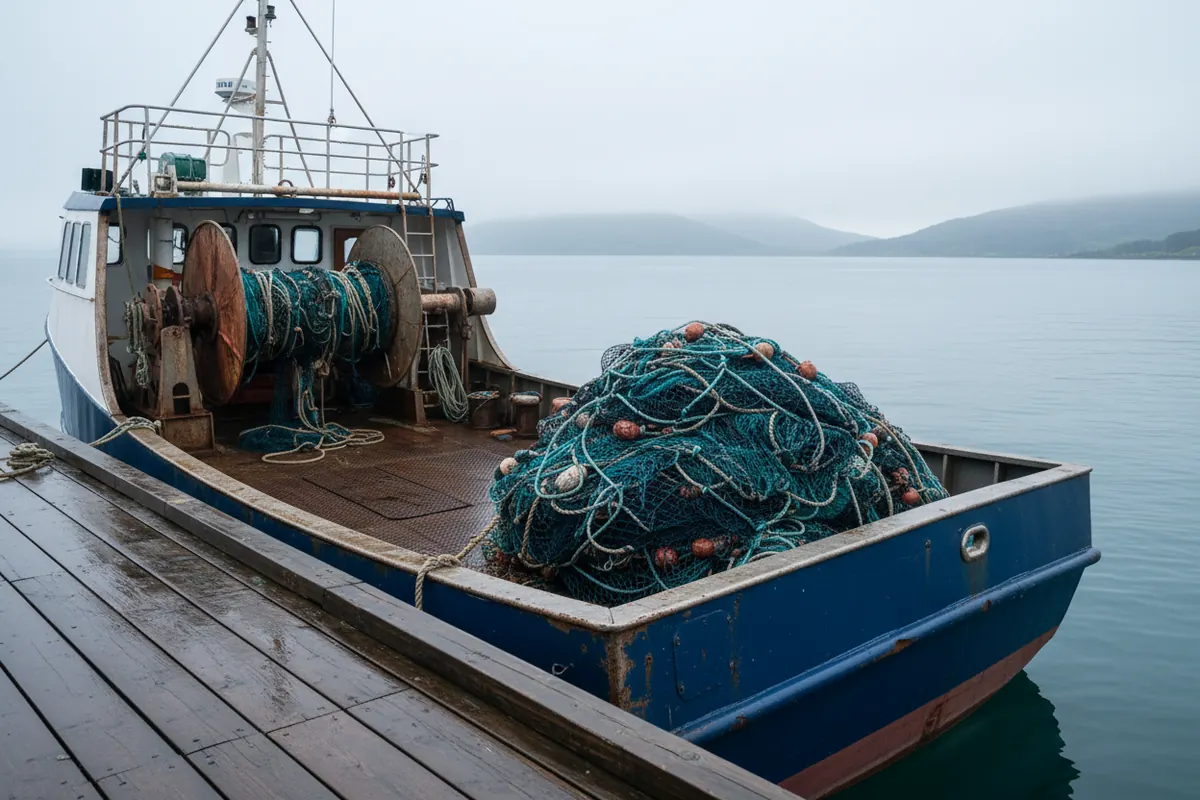
The stern deck of a fishing trawler in harbour, nets piled near the drum.
Immediate answer

How federal maritime law treats injured commercial fishermen: seaman status, the Jones Act, written fishing agreements, share pay and the seven-day injury report.

On this page
  1. What Makes Commercial Fishing One of the Most Hazardous Occupations in the United States
  2. Are You a Seaman? Why Status Shapes a Fisherman's Legal Rights
  3. What Your Written Fishing Agreement Must Cover
  4. Reporting an Injury on a Fishing Vessel: What the Law Requires
  5. What a Jones Act Claim Has to Show After a Fishing Injury
  6. Questions Worth Asking Before Deciding How to Proceed
  7. Frequently asked questions
  8. Sources

If you were hurt working on a fishing vessel, federal maritime law may give you rights that ordinary injury law does not. A fisherman who qualifies as a seaman may bring a Jones Act claim against the employer, and federal law also governs written fishing agreements, share pay and a seven-day injury report.

Most people facing a commercial fishing injury are dealing with several worries at once: a body that will not heal on schedule, a season that is slipping away, a share of the catch that may or may not arrive, and no clear idea whether the law treats them as a seaman, a contractor or something else. If you are a family member after a serious injury or a death on the water, the questions are heavier still. This page walks through how federal maritime law approaches injuries to deckhands and crew on fishing vessels, what the written fishing agreement and the injury report have to do with it, and which records tend to matter.

What Makes Commercial Fishing One of the Most Hazardous Occupations in the United States

The National Institute for Occupational Safety and Health (NIOSH) states on its Commercial Fishing Safety page that commercial fishing is one of the most hazardous occupations in the United States. According to that page, the commercial fishing industry had a fatality rate over 40 times higher than the national average in 2019.

If you were hurt in heavy weather, after long hours, during strenuous labor or around hazardous machinery, those are the same working conditions NIOSH uses to describe fishing operations. Drawing on its Commercial Fishing Incident Database, NIOSH says hazards can differ between fisheries and regions, and that the greatest dangers to fishermen are vessel disasters, falls overboard, and working with machinery on deck. Its examples of vessel disasters are sinkings, capsizings and groundings; among onboard hazards it lists dangerous machinery, slippery surfaces and toxic substances.

In other words, an injury hauling gear or a fall on a wet deck is not a fluke the industry has never seen; a federal agency names these risks as the core dangers of the work. That recognition does not decide anyone's case, and a dangerous job does not mean anyone was at fault. It does explain why Congress wrote specific rules for fishing crews and vessels.

The vessel's own safety equipment, such as lifesaving gear and drills, is a separate subject from the crew member's legal position. For an injured fisherman, the starting point is a different question: whether the law treats you as a seaman.

Seaman status is the threshold question. Under federal maritime law, a seaman is a worker whose job connects them to a vessel in navigation and whose work contributes to that vessel's function or mission. Whether a particular deckhand, processor or skipper meets that description turns on the facts of the job, which is why the Jones Act seaman question gets its own close attention.

The reason the label matters so much is the statute behind it. Under 46 U.S.C. § 30104(a), "A seaman injured in the course of employment or, if the seaman dies from the injury, the personal representative of the seaman may elect to bring a civil action at law, with the right of trial by jury, against the employer." The same subsection provides that "Laws of the United States regulating recovery for personal injury to, or death of, a railway employee apply to an action under this section."

That section is what people mean by the Jones Act: the federal law that lets an injured seaman sue the employer, before a jury, for an injury suffered on the job, and lets the seaman's personal representative bring the action after a death from the injury. Seaman status is also the gateway to maintenance and cure. Maintenance is a living allowance, and cure is the cost of medical care, owed by the employer to a seaman who is hurt or falls ill while in the service of the vessel, separate from any negligence claim.

Not every person who works around boats is a seaman. Dock and port workers, for example, may fall under the longshore worker rules instead. Which law applies depends on the facts: where the injury happened, the vessel involved, the waters it was on, and the injured person's status. For a fisherman, the job title on a crew list does not settle the matter; the work itself does. A person in this position may want to consider how much of the work took place aboard the vessel, and a conversation with an attorney can help clarify how status questions are weighed.

What Your Written Fishing Agreement Must Cover

Federal law requires a written contract before many fishing voyages begin. Under 46 U.S.C. § 10601, before a voyage begins, the owner, charterer or managing operator of a fishing vessel, fish processing vessel or fish tender vessel, or a representative such as the master or individual in charge, "shall make a fishing agreement in writing with each seaman employed on board" if the vessel is at least 20 gross tons, as measured under the tonnage provisions the section names, and is on a voyage from a port in the United States.

If you signed such an agreement, the statute says what it has to contain:

  • the period the agreement is in effect;
  • the terms of any wage, share or other compensation arrangement peculiar to the fishery;
  • for a catcher processor or fish processing vessel employing more than 25 crewmembers, a requirement that each crewmember be served not less than three meals a day totaling not less than 3,100 calories and including adequate water and minerals; and
  • other agreed terms.

Many fishing crews are paid through share pay: instead of a fixed wage, crew members receive a portion of the proceeds from the sale of the catch. Because the statute requires share terms to be written into the agreement, that document is usually where a fisherman's pay arrangement is spelled out, and it often answers the first money question after an injury: what was promised for the trip.

Federal law also ties those shares to the vessel itself. Under 46 U.S.C. § 10602(a), when fish caught under such an agreement are delivered to the vessel owner for processing and sold, "the vessel is liable in rem for the wages and shares of the proceeds of the seamen." In rem means the claim runs against the vessel as property, not only against a person. The same subsection states that "An action under this section must be brought within six months after the sale of the fish." That period applies to an action under that section; it is not a general deadline for maritime injury claims. Families may weigh whether a copy of the agreement was kept aboard, at home, or with the employer.

Reporting an Injury on a Fishing Vessel: What the Law Requires

Fishing crews carry a reporting duty written into federal law. Under 46 U.S.C. § 10603(a), "A seaman on a fishing vessel, fish processing vessel, or fish tender vessel shall notify the master or individual in charge of the vessel or other agent of the employer regarding any illness, disability, or injury suffered by the seaman when in service to the vessel not later than seven days after the date on which the illness, disability, or injury arose."

The duty is meant to be visible on board. Under 46 C.F.R. § 28.165, each vessel must post, in a highly visible location accessible to the crew, a placard at least 5 inches by 7 inches that reads "Notice Report All Injuries" and restates the seven-day requirement. Federal law also lists that placard among the items uninspected fishing vessels must carry, in 46 U.S.C. § 4502.

The rule is short, but it touches everyone hurt at sea: the report goes to the master, the individual in charge or another agent of the employer, and the clock in the statute runs from the date the injury arose. Some injuries, like a strained back that worsens over days, raise their own questions about when that date was. Whether a report was made, to whom and on what date are details a person may want to write down while memory is fresh, along with any log entry that reflects it.

What a Jones Act Claim Has to Show After a Fishing Injury

A Jones Act claim rests on negligence, which is the failure to use reasonable care. The action created by 46 U.S.C. § 30104(a), discussed above, asks four questions, and each one points to something about what happened on your vessel:

  • Duty: the employer owed the seaman an obligation of reasonable care. For a crew member, this is the baseline the rest of the claim is measured against.
  • Breach: the employer, or someone acting for it, fell short of that care. On a fishing deck, this question looks at the conditions and practices in place, such as how gear and walkways were kept, and who knew about a problem.
  • Causation: that failure played a part in bringing about the injury. The question here is how the fall, the machinery accident or the other event actually happened.
  • Damages: the seaman suffered harm the law recognizes, such as an injury that keeps a fisherman off the boat.

Damages in an injury case are described by category. The law may allow medical expenses, lost earnings and pain and suffering, and in a death case, damages for the loss suffered by the family the law names. What, if anything, is available depends on the injury, the proof and the law that governs the claim. An injury on a dangerous deck does not by itself prove that anyone was careless; the elements have to be shown from the facts.

A related doctrine often comes up alongside the Jones Act. Unseaworthiness refers to the vessel owner's duty to provide a vessel, with its equipment and crew, that is reasonably fit for its intended work. A fall caused by a worn line, a broken winch or a missing guard can raise both negligence and seaworthiness questions, as the site's page on vessel deck fall injuries describes.

Families may weigh which witnesses and records speak to each element. A conversation with an attorney can help connect the facts of what happened to these elements, and the broader Jones Act lawyer page explains how such a claim is structured.

Questions Worth Asking Before Deciding How to Proceed

The facts that usually shape a commercial fishing injury case come back to a handful of questions. Was the injured person a seaman, given the work and the connection to the vessel? How large was the vessel, and was the voyage from a port in the United States, which affects whether a written fishing agreement was required? What does the agreement say about wages or shares? Was the injury reported, to whom, and when? And what dates matter, including the date of the injury and, for a share claim under section 10602(a), the date the fish were sold?

Each of these answers points a little differently. A deckhand on a small boat may have no written agreement because the statute's size condition was not met; a processor on a large vessel may have one with detailed share terms. The rules that apply depend on the facts and on the law that governs the particular claim, so two people hurt on the same trip can stand in different legal positions.

The records that usually bear on these questions include the injury report or log entry and when it was made, the name of the person it was given to, medical records from the vessel and from shore, photos or video of the deck or equipment involved, the names of crew members who saw what happened, and the written fishing agreement. Families after a death often gather the same papers along with any communications from the employer, and papers showing who the personal representative is may matter too, since 46 U.S.C. § 30104(a) gives that person the right to bring the action.

A person in this position may want to consider which of these questions they can already answer and which remain unclear. If you'd like to talk through how seaman status, your agreement and your injury report fit together, you can request a case evaluation and sort out those questions in conversation with our attorney.

Free case evaluation

No Fee Unless We Win Your Case

A free case evaluation is how it starts. Tell us what happened, and we’ll help you understand your options. You pay no fee unless we win your case.

Maritime Injury Law Center

How it works

  1. Call us or request a free case evaluationTell us what happened, in your own words.
  2. Talk through your caseYour options, and what your case may be worth.
  3. No fee unless we winYou pay no attorney fee unless we win your case.
Free case evaluation

Tell Us What Happened

Frequently asked questions

What is the fatality rate in commercial fishing?

NIOSH reports that the commercial fishing industry had a fatality rate over 40 times higher than the national average in 2019. The agency tracks these deaths through its Commercial Fishing Incident Database, and its studies show that hazards differ between fisheries and regions. NIOSH names vessel disasters, falls overboard and machinery on deck as the greatest dangers.

What are the main risks associated with commercial fishing work?

NIOSH names three greatest dangers. Vessel disasters include sinkings, capsizings and groundings. Falls overboard occur when a crewmember goes off the vessel into the water. Working with machinery on deck brings its own risks, alongside slippery surfaces and toxic substances. NIOSH also lists falls from docks and diving operations among other hazards.

Does a commercial fisherman qualify as a seaman under maritime law?

Many do, but it is not automatic. Status depends on the work: a connection to a vessel in navigation and duties that contribute to the vessel's function. Qualifying matters because it opens the Jones Act action under 46 U.S.C. § 30104(a) and maintenance and cure. Seasonal or shore-based work can make the answer less clear.

What is the Jones Act and how does it apply to injured fishermen?

It is the federal law, at 46 U.S.C. § 30104(a), that lets a seaman injured in the course of employment sue the employer before a jury. A fisherman who is a seaman may use it. The claim asks about duty, breach, causation and damages, and the statute applies federal railway-employee injury law to it.

What is maintenance and cure?

Maintenance and cure is a separate obligation from a negligence claim. Maintenance is a living allowance, and cure covers medical care, owed by the employer to a seaman hurt or taken ill in the service of the vessel. It does not depend on proving the employer was careless, though seaman status remains the threshold.

What does a written fishing agreement have to include?

Under 46 U.S.C. § 10601, for a vessel of at least 20 gross tons on a voyage from a U.S. port, the agreement must state its period of effectiveness, the terms of any wage, share or other compensation arrangement, other agreed terms, and, on certain large processing vessels with more than 25 crewmembers, a three-meals-a-day requirement.

How long does a fisherman have to report an injury on a fishing vessel?

Under 46 U.S.C. § 10603(a), a seaman on a fishing, fish processing or fish tender vessel must notify the master, the individual in charge or another agent of the employer not later than seven days after the injury, illness or disability arose. 46 C.F.R. § 28.165 requires a placard stating this duty posted where crew can see it.

What is share pay in commercial fishing?

Share pay means a crew member earns a portion of the catch's proceeds rather than a set wage. When a written agreement is required, its share terms must be in it. Under 46 U.S.C. § 10602(a), the vessel itself is liable in rem for those shares once fish are delivered and sold, with a six-month period for that section's action.

What records matter after a commercial fishing injury?

The records that usually matter are the written fishing agreement, the injury report and the date it was given, medical records, photos or video of the deck or gear, and the names of crew who saw what happened. Pay records showing settled or unsettled shares can also bear on the money side of a claim.

Sources

Statutes, regulations and court sources

  1. 0146 U.S.C. § 10601 — Fishing agreements · GovInfo (U.S. Government Publishing Office)
  2. 0246 U.S.C. § 10602 — Recovery of wages and shares of fish under agreement · GovInfo (U.S. Government Publishing Office)
  3. 0346 U.S.C. § 10603 — Seaman's duty to notify employer regarding illness, disability, and injury · GovInfo (U.S. Government Publishing Office)
  4. 0446 U.S.C. § 30104 — Personal injury to or death of seamen · GovInfo (U.S. Government Publishing Office)
  5. 0546 U.S.C. § 4502 — Safety standards · GovInfo (U.S. Government Publishing Office)
  6. 0646 C.F.R. § 28.165 — Injury placard · Electronic Code of Federal Regulations

Other sources

  1. 07Commercial Fishing Safety, National Institute for Occupational Safety and Health (CDC) · Centers for Disease Control and Prevention